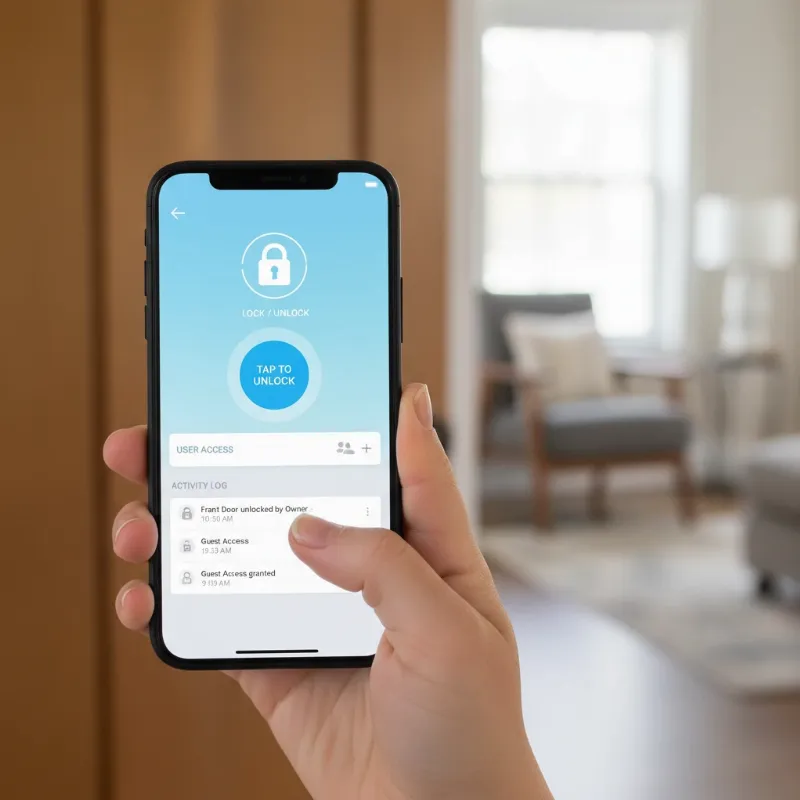
Imagine approaching your front door, hands full, expecting your smart lock to seamlessly unlock, only to be met with a stubborn, unresponsive deadbolt. This frustration is a common experience for many smart home enthusiasts when their auto-unlock feature stops working as expected. While the convenience of keyless entry is undeniable, issues can arise, turning a helpful feature into a headache. Understanding the underlying technology and common pitfalls is the first step toward restoring the effortless entry you deserve. This guide will delve into why your smart lock’s auto-unlock might be failing, outlining practical troubleshooting steps and advanced tips to ensure consistent, reliable performance.
Understanding Smart Lock Auto-Unlock Technology
|
Our Picks for the Best smart locks in 2026
As an Amazon Associate I earn from qualifying purchases.
|
||
| Num | Product | Action |
|---|---|---|
| 1 | Smart Door Lock with Camera Fingerprint Keyless Entry Door Lock Electronic Deadbolt with Keypad Code, App Remote Control, Auto Unlock for Front Door |

|
| 2 | Wyze Palm Lock, Smart Door Lock with Palm Vein Recognition, Keyless Entry Smart Locks for Front Door, Keypad, Auto Lock, Dual Battery, Wi-Fi, Works with Alexa & Google, BHMA, IP53, Mechanical Key |
|
| 3 | Wyze Auto-Lock Bolt v2, Fingerprint Keyless Entry Smart Lock, AI Learning Scanner with Wi-Fi Front Door Lock Deadbolt, Auto-Lock, 8 Months Battery, BHMA2, IP53, Anti-Peep Keypad, Backup Keys |
|
| 4 | Tapo Smart Wi-Fi Deadbolt Door Lock – Keyless Tactile Buttons, Customized Access with in-App Monitoring, Auto-Lock, IP54 Weatherproof, BHMA Grade 3, Compatible with Standard Door Sizes, Tapo DL100 |
|
| 5 | TEEHO TE001 Keyless Entry Door Lock with Keypad - Smart Deadbolt Lock for Front Door with 2 Keys - Auto Lock - Easy Installation - Matte Black |
|
| 6 | Schlage Encode Smart WiFi Deadbolt Lock for Front Door - Keyless Entry with App or Touchscreen - Works with Alexa, Hey Google, & Airbnb - Create Codes for Guests - Matte Black |
|
| 7 | ULTRALOQ U-Bolt Pro WiFi Smart Lock with Door Sensor, 8-in-1 Keyless Entry Door Lock with Fingerprint ID, App Remote Control, Built-in WiFi Keypad Deadbolt, Auto Unlock, IP65 Waterproof, Easy Install |
|
| 8 | Yale Security Assure Lock 2 Deadbolt, Black Suede Keyed Smart Entry Door Lock with Wi-Fi Connected Keypad for Code Entry and Remote Access, YRD410-WF1-BSP |
|
| 9 | Schlage Encode Smart WiFi Deadbolt Lock for Front Door - Keyless Entry with App or Touchscreen - Works with Alexa, Hey Google, & Airbnb - Create Codes for Guests - Satin Nickel Silver |
|
| 10 | Smart Door Handle Lock with Keypad: Yamiry Fingerprint Smart Knob - Keyless Entry Digital Lock for Front Door - Deadbolt with APP - Generate Passcode Remotely - DIY Installation |
|
How does the magic of auto-unlock truly happen? At its core, smart lock auto-unlock relies on a sophisticated interplay of your smartphone’s capabilities and the lock’s intelligent design. Primarily, it utilizes geofencing and proximity sensing. Geofencing, powered by your phone’s GPS, establishes a virtual boundary around your home. When your phone detects you’ve left this “home” zone (often a radius of 200 meters or more), the smart lock app shifts into an “Away” mode, priming the auto-unlock feature for your return.
As you re-enter this geofenced area, your smartphone then begins actively searching for your smart lock using Bluetooth Low Energy (BLE) and sometimes Wi-Fi. Once you’re within close proximity to your door, typically 20-30 feet, the app establishes a secure connection with the lock, verifies your identity, and triggers the auto-unlock mechanism. This intricate dance ensures that the lock only engages when you are genuinely approaching your door, not just passing by or lingering nearby. The companion app on your phone acts as the central command, orchestrating these technologies and communicating with your lock’s firmware.
Common Reasons Your Auto-Unlock Feature Stops Working
When your smart lock’s auto-unlock feature falters, the cause can range from simple oversights to more complex technical glitches. Identifying the root problem is key to finding an effective solution.
Battery Life: One of the most frequent culprits for smart lock malfunction is low or dead batteries in the lock itself. While the app might still connect, insufficient power can prevent the motor from engaging to unlock the door. Always check battery levels first.
Connectivity Issues: Smart locks heavily depend on stable wireless connections. If your phone’s Bluetooth is disabled or experiencing interference, or if your Wi-Fi signal is weak or inconsistent, the lock may fail to receive the unlock command. Issues with your home’s router or network congestion can also contribute to poor connectivity.
App and Firmware Problems: Just like any other smart device, smart locks and their companion apps require regular updates. Outdated firmware on the lock or an old version of the app on your phone can lead to compatibility issues, bugs, and performance degradation. Sometimes, a software glitch within the app or corrupted app data can also disrupt the auto-unlock function.
Phone Settings: Your smartphone’s operating system (iOS or Android) has significant control over how apps function in the background and access hardware features.
- Location Permissions: The smart lock app typically requires location services to be set to “Always Allow” and “Precise Location” enabled for accurate geofencing. Without these permissions, the app cannot accurately determine your arrival.
- Battery Optimization (Android): Many Android devices have aggressive battery optimization features that can restrict background app activity, inadvertently preventing your smart lock app from running the necessary processes for auto-unlock.
- Background App Refresh (iOS): Similar to Android’s battery settings, if background app refresh is disabled for your smart lock app on iOS, it may not be able to track your location and prepare for auto-unlock.
Physical Obstructions: While less common for auto-unlock specifically, physical issues with the door or deadbolt can impede any unlocking mechanism. A misaligned door or frame, or a jammed deadbolt due to debris or wear, can physically prevent the lock from disengaging.
Geofence Configuration: The “Home” and “Away” zones are crucial for auto-unlock. If these geofence settings are configured too narrowly, or if the system struggles to accurately pinpoint your location, the auto-unlock might not trigger at the ideal time. Additionally, some systems may encounter conflicts if multiple users have auto-unlock enabled for the same lock, or if you have multiple smart locks in a single geofence.
User Error or Habits: Simple actions can sometimes disrupt the feature. Force-quitting the smart lock app can prevent it from tracking your location. Furthermore, auto-unlock typically works best if you consistently enter and exit through the same door, as the system learns patterns.
Step-by-Step Troubleshooting for Auto-Unlock Failure
When your smart lock auto-unlock isn’t performing, a systematic approach to troubleshooting can often resolve the issue. Don’t let a minor glitch detract from the convenience your smart home provides.
1. Check and Replace Batteries:
Begin with the most straightforward fix. Low batteries are a leading cause of smart lock issues.
- Access your smart lock’s battery compartment and replace the batteries with fresh ones.
- Many smart locks will indicate low battery status within their app, but a physical check is always a good first step.
2. Verify Connectivity:
A stable connection is paramount for auto-unlock.
- Bluetooth: Ensure Bluetooth is enabled on your smartphone. Move closer to the smart lock to rule out range issues.
- Wi-Fi: Confirm your home Wi-Fi network is active and providing a strong signal to the smart lock’s location. If your lock uses a bridge or hub for Wi-Fi connectivity, ensure that device is powered on and connected.
- Restart Network Equipment: A quick reboot of your Wi-Fi router and smart lock hub (if applicable) can often clear temporary network glitches.
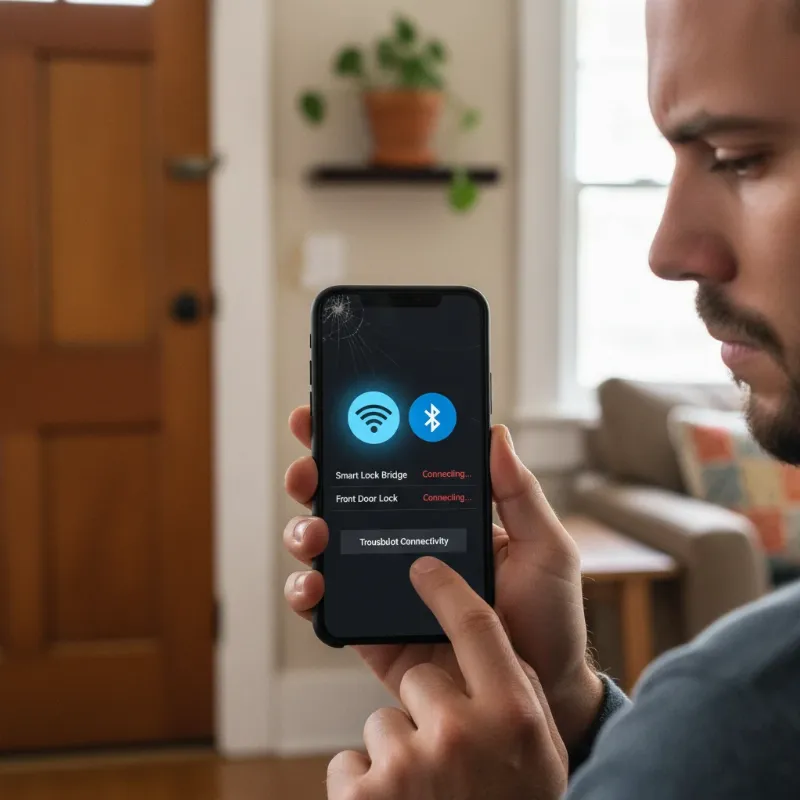 A person checking their smartphone for Wi-Fi and Bluetooth settings to troubleshoot smart lock auto-unlock issues
3. Update Software:
Outdated software is a common source of bugs and compatibility problems.
- Smart Lock Firmware: Open your smart lock’s companion app and check for any available firmware updates for the lock itself. Install them immediately.
- Mobile App: Ensure your smart lock app is updated to the latest version from your phone’s app store (Google Play Store for Android, Apple App Store for iOS).
- Phone OS: Verify that your smartphone’s operating system is running the latest version. OS updates often include critical bug fixes and improvements that can affect app performance.
4. Optimize Phone Settings:
Your phone’s settings play a crucial role in the auto-unlock’s functionality.
- Location Permissions: Navigate to your phone’s settings, find your smart lock app, and set its location access to “Always” or “Allow all the time.” Also, ensure “Precise Location” (or equivalent) is enabled.
- Battery Optimization (Android): For Android users, go to your phone’s battery settings, find the smart lock app, and disable any battery optimization or “put app to sleep” features for it. This allows the app to run continuously in the background.
- Background App Refresh (iOS): On iOS, ensure “Background App Refresh” is enabled for your smart lock app in your phone’s settings.
5. Restart and Reset:
Sometimes, a fresh start is all that’s needed.
- Restart Smartphone: Power off your phone completely and then turn it back on.
- Restart Smart Lock: If your lock has a removable battery pack, remove it for 30 seconds and reinsert it. Some locks have a restart button or a procedure outlined in their manual.
- Clear App Cache/Data (Android): In your Android phone’s settings, go to Apps, find your smart lock app, and clear its cache and data. You may need to log back into the app afterward.
- Disable/Re-enable Auto-Unlock: Within your smart lock app, go to the auto-unlock settings, temporarily disable the feature, wait a few seconds, and then re-enable it.
6. Review Geofence Settings:
Accurate geofencing is critical for timely auto-unlocks.
- Check your app’s geofence settings. Ensure the “Home” zone is appropriately sized – not too small that your phone struggles to detect entry, and not so large that it triggers too far from your door.
- If you have multiple smart locks or family members using auto-unlock, verify that configurations are not conflicting. Some manufacturers recommend only setting up auto-unlock for one device per household.
7. Inspect Physical Components:
A quick visual check can identify physical impediments.
- Open and close your door several times, observing if it catches or rubs against the frame.
- Manually operate the deadbolt to ensure it moves freely without resistance. Clear any visible debris from the latch or strike plate.
Advanced Tips for Reliable Auto-Unlock Performance
Beyond basic troubleshooting, certain practices can significantly enhance the reliability of your smart lock’s auto-unlock feature. Proactive maintenance and understanding your system’s nuances can prevent future frustrations.
- Consistent Software Maintenance: Make it a habit to check for and install all available updates for your smart lock firmware, mobile app, and smartphone operating system regularly. These updates often contain performance enhancements and bug fixes crucial for seamless operation.
- Regular Battery Checks: Don’t wait for your lock to stop working. Many smart lock apps provide battery level indicators. Monitor these regularly and proactively replace batteries before they become critically low.
- Understand Geofence Behavior: Experiment with your geofence “IN” and “OUT” zone settings to find the optimal distance for your specific home and arrival patterns. Some systems allow fine-tuning these ranges.
- Avoid Force-Quitting the App: Unless you are intentionally troubleshooting, allow your smart lock app to run in the background. This ensures it can consistently monitor your location and communicate with the lock.
- Calibrate Your Lock (If Applicable): Some smart locks offer a calibration feature within their app, which helps the lock learn the physical characteristics of your door and deadbolt, potentially improving locking and unlocking accuracy. Consult your lock’s manual for this option.
- Dedicated Wi-Fi for IoT Devices: If you experience persistent connectivity issues, consider setting up a separate 2.4GHz Wi-Fi network specifically for your smart home devices. This can reduce interference and provide a more stable connection for your smart lock.
“A smart lock’s auto-unlock feature isn’t just about convenience; it’s a testament to integrated technology working harmoniously. When it fails, it reminds us how many layers of software and hardware cooperate to create that seamless experience.” – Dr. Amelia Chen, Smart Home Integration Specialist
Conclusion
The auto-unlock feature on your smart lock offers unparalleled convenience, transforming the way you interact with your home. When it encounters issues, it can be a source of significant frustration. However, by understanding the underlying technology and systematically addressing common problems such as battery life, connectivity, app settings, and physical obstructions, you can often restore this vital function. Regular maintenance, including software updates and battery checks, alongside optimizing your phone’s settings and geofence configurations, will ensure a consistently smooth and secure entry experience. Don’t let a temperamental auto-unlock deter you from the benefits of smart home living; with these troubleshooting steps, you’ll be back to effortless entry in no time.
Ready to explore more ways to optimize your smart home security? Visit SmartLocksPro.com for expert advice, product reviews, and the latest innovations in smart lock technology.
Frequently Asked Questions
Is smart lock auto-unlock secure?
Yes, smart lock auto-unlock features are designed with multiple layers of security. They rely on encrypted connections (Bluetooth/Wi-Fi), secure authentication protocols, and geofencing to ensure the lock only engages when an authorized user is within a specific, close range of their home. While no system is foolproof, reputable brands implement robust security measures to protect your property.
Why does my smart lock auto-unlock drain my phone battery?
The auto-unlock feature uses your phone’s GPS for geofencing and Bluetooth/Wi-Fi for proximity detection, all of which consume battery power. If location services are constantly running in the background or battery optimization is disabled for the app, it can lead to increased battery drain. Regularly reviewing your phone’s battery usage and adjusting settings can help mitigate this.
How accurate is smart lock geofencing?
Smart lock geofencing accuracy can vary based on several factors, including your phone’s GPS capabilities, cellular signal strength, and environmental conditions. While generally reliable, dense urban areas or areas with limited GPS visibility might experience slight variations. Most systems allow you to adjust the size of your geofence zones, enabling you to fine-tune the trigger distance for optimal performance.