For generations, the doormat, the flowerpot, or the trusty fake rock has been the go-to spot for a spare house key. It’s a habit rooted in convenience, a simple solution for forgotten keys, unexpected guests, or letting in a dog walker. However, this seemingly harmless practice is, in fact, a glaring security vulnerability in an era where home safety demands smarter solutions. It’s time to rethink this outdated approach and embrace modern alternatives like smart locks that offer both convenience and unparalleled peace of mind.
The All-Too-Common Mistake: Hiding Your Keys Outdoors
The allure of a hidden spare key is understandable. Life gets busy, and losing keys or needing to grant access to a trusted person on short notice happens. Yet, the places most homeowners choose for their “secret” stash are anything but secret to those with malicious intent. Burglars are well aware of these common hiding spots, making them the first places they check when casing a property.
Consider the classic locations:
- Under the Doormat: The most iconic, and perhaps the most exposed, hiding spot. It’s an immediate giveaway.
- Under a Flowerpot: Slightly more effort required, but still a predictable target.
- Fake Rocks or Sprinkler Heads: These rarely blend seamlessly with their surroundings and are easily identifiable by a seasoned thief.
- Inside the Mailbox: Another easily accessible spot that provides zero protection.
- Magnetic Key Holders: While seemingly clever, these can often be found on metal surfaces near the door, easily discovered by someone looking.
These methods offer a false sense of security, effectively creating an open invitation for intruders rather than deterring them.
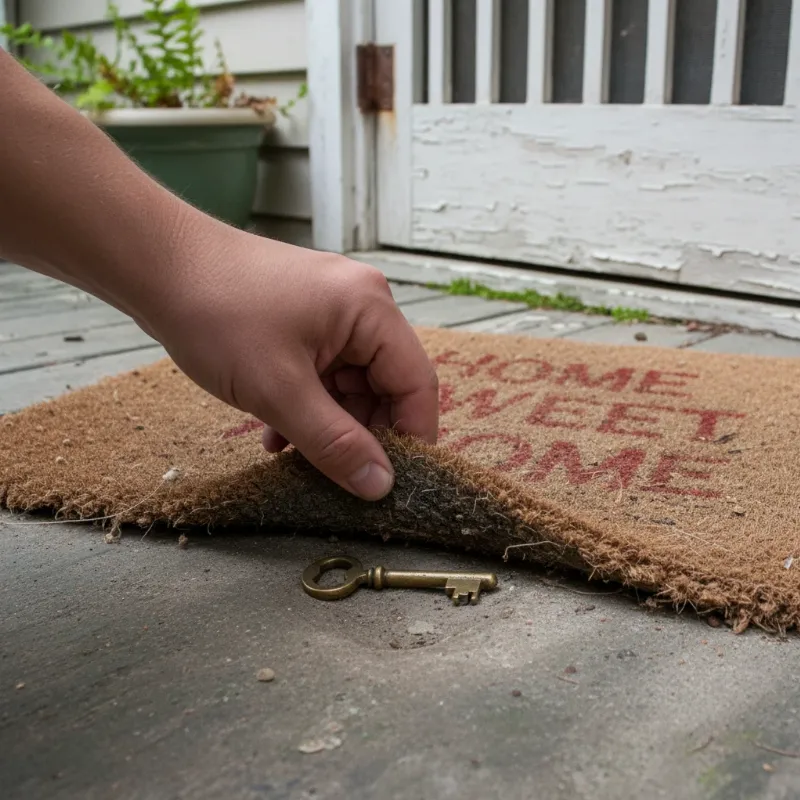 A hand reaching under a doormat for a hidden spare key, symbolizing common home security vulnerabilities.
Serious Risks You Might Not Consider
Beyond the obvious ease of discovery, hiding a key outdoors carries several significant risks that many homeowners overlook. These vulnerabilities can have far-reaching consequences for your security and financial well-being.
Easy Access for Thieves
|
Our Picks for the Best smart locks in 2026
As an Amazon Associate I earn from qualifying purchases.
|
||
| Num | Product | Action |
|---|---|---|
| 1 | Wyze Auto-Lock Bolt v2, Fingerprint Keyless Entry Smart Lock, AI Learning Scanner with Wi-Fi Front Door Lock Deadbolt, Auto-Lock, 8 Months Battery, BHMA2, IP53, Anti-Peep Keypad, Backup Keys |

|
| 2 | Schlage Encode Smart WiFi Deadbolt Lock for Front Door - Keyless Entry with App or Touchscreen - Works with Alexa, Hey Google, & Airbnb - Create Codes for Guests - Satin Nickel Silver |
|
| 3 | Wyze Palm Lock, Smart Door Lock with Palm Vein Recognition, Keyless Entry Smart Locks for Front Door, Keypad, Auto Lock, Dual Battery, Wi-Fi, Works with Alexa & Google, BHMA, IP53, Mechanical Key |
|
| 4 | ULTRALOQ U-Bolt Pro WiFi Smart Lock with Door Sensor, 8-in-1 Keyless Entry Door Lock with Fingerprint ID, App Remote Control, Built-in WiFi Keypad Deadbolt, Auto Unlock, IP65 Waterproof, Easy Install |
|
| 5 | Tapo Smart Wi-Fi Deadbolt Door Lock – Keyless Tactile Buttons, Customized Access with in-App Monitoring, Auto-Lock, IP54 Weatherproof, BHMA Grade 3, Compatible with Standard Door Sizes, Tapo DL100 |
|
| 6 | TEEHO TE001 Keyless Entry Door Lock with Keypad - Smart Deadbolt Lock for Front Door with 2 Keys - Auto Lock - Easy Installation - Matte Black |
|
| 7 | Smart Door Lock with Camera Fingerprint Keyless Entry Door Lock Electronic Deadbolt with Keypad Code, App Remote Control, Auto Unlock for Front Door |
|
| 8 | Schlage Encode Smart WiFi Deadbolt Lock for Front Door - Keyless Entry with App or Touchscreen - Works with Alexa, Hey Google, & Airbnb - Create Codes for Guests - Matte Black |
|
| 9 | Yale Security Assure Lock 2 Deadbolt, Black Suede Keyed Smart Entry Door Lock with Wi-Fi Connected Keypad for Code Entry and Remote Access, YRD410-WF1-BSP |
|
| 10 | Smart Door Handle Lock with Keypad: Yamiry Fingerprint Smart Knob - Keyless Entry Digital Lock for Front Door - Deadbolt with APP - Generate Passcode Remotely - DIY Installation |
|
The most immediate danger is that a burglar can gain entry to your home without any forced entry. This means a quicker, quieter break-in, reducing the chances of detection. With a key, they don’t need to damage your property, making their illicit entry almost seamless. A concerning statistic reveals that approximately 33% of home burglars enter through the front door, making any vulnerability near this entry point particularly risky.
Voiding Your Home Insurance
A critical, yet often forgotten, risk is the potential impact on your home insurance. Many insurance policies require evidence of forced entry for a theft claim to be approved. If a burglar uses a hidden key to unlock your door, there might be no signs of forced entry. This can lead to your claim being denied or significantly reduced, leaving you to bear the financial burden of lost valuables and property damage alone. Some estimates suggest that as many as one in five people could be at risk of voiding their home insurance by not securing their spare key.
Observed Behavior and Key Duplication
Burglars often “case” properties, observing daily routines and habits. If you frequently retrieve a hidden key, a watchful thief might notice the pattern and pinpoint your hiding spot. Once found, they could even duplicate your key, giving them permanent, unrestricted access to your home at any time without your knowledge.
Uncontrolled Access
When a key is hidden outside, you lose control over who might find it. It could be an opportunistic passerby, a curious child, or even someone with ill intentions who stumbles upon it by chance. Unlike handing a key to a trusted individual, an externally hidden key offers no assurance of who will ultimately gain access.
“A hidden key isn’t just a minor oversight; it’s a security Achilles’ heel that grants unauthorized access without a trace.” – Ava Thompson, Home Security Analyst
The Evolution of Home Access: Why Smart Locks are the Superior Alternative
The good news is that modern technology provides robust, convenient, and truly secure alternatives to the risky practice of hiding keys. Smart locks are at the forefront of this evolution, completely eliminating the need for physical spare keys and offering a new level of control over your home’s access points.
A smart lock is a keyless entry system that connects to your home’s network, allowing you to lock and unlock your door using a variety of digital methods. They fundamentally change how you manage access, moving from vulnerable physical keys to encrypted, customizable digital credentials. By embracing smart locks, you close the door on all the risks associated with hidden physical keys.
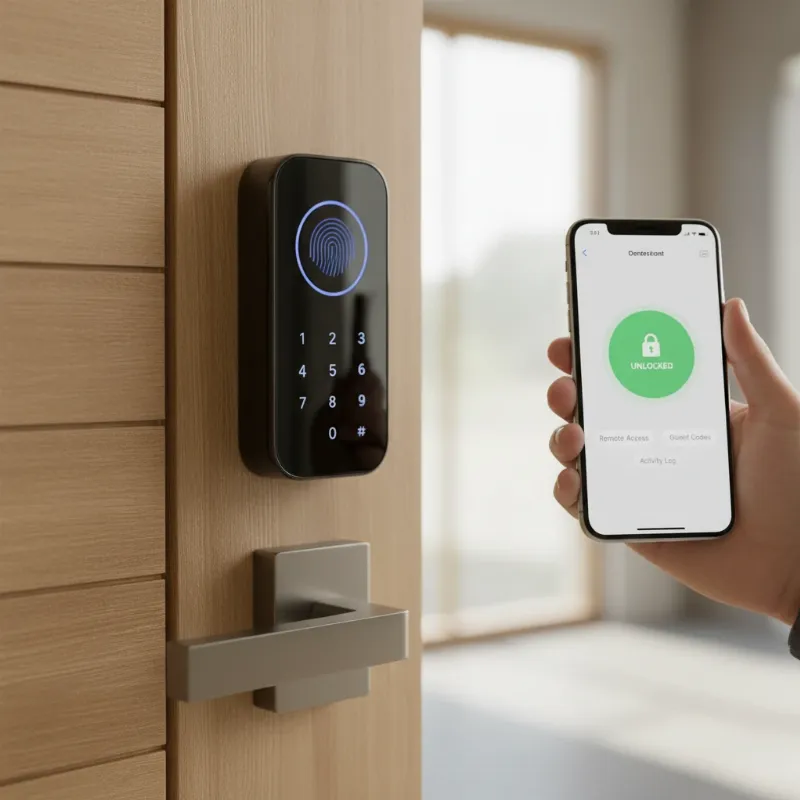 A sleek, modern smart lock installed on a wooden door, representing advanced keyless home security solutions.
Types of Smart Locks: Your Modern Keyless Solutions
The smart lock market offers a diverse range of options, each designed to provide enhanced security and convenience. Understanding the different types can help you choose the best fit for your home.
- Keypad Locks: These allow entry via a programmable numerical code. You can set unique codes for family members, guests, or service providers, and even revoke them remotely. This is an excellent solution for temporary access without handing out physical keys.
- Fingerprint Locks: Utilizing biometric technology, these locks grant access with a simple touch of a registered fingerprint. They offer high security and speed, eliminating the need to remember codes or carry anything at all.
- Bluetooth/Wi-Fi Locks: These connect to your smartphone, allowing you to lock and unlock your door from an app. Wi-Fi enabled versions offer remote control from anywhere with an internet connection, while Bluetooth versions work when you are within a certain range.
- Face Recognition Locks: Representing the cutting edge, these locks use advanced cameras to identify authorized users by their facial features, offering a truly hands-free and highly secure entry method.
- Smart Lock Integration: Many smart locks can seamlessly integrate with broader smart home systems, allowing you to control lighting, thermostats, and security cameras alongside your door locks from a single app or voice command.
Beyond Smart Locks: Other Secure Alternatives for Spare Access
While smart locks offer the most comprehensive solution for key management, other secure alternatives can also help you move away from hiding keys under the doormat.
- Secure Key Safes/Lockboxes: These wall-mounted or portable boxes require a combination to open, providing a more secure storage location for a physical key than an obvious hiding spot. They are durable, weather-resistant, and only accessible to those who know the code.
- Trusted Network: Entrusting a spare key to a reliable friend, neighbor, or family member who lives nearby is a time-tested and secure method. Ensure they are someone you implicitly trust and can easily reach in an emergency.
- Smart Doorbells with Integrated Locks: Some smart doorbell cameras integrate directly with smart locks. This allows you to see who is at your door and, if needed, unlock it remotely via your smartphone, providing access even when you’re not home.
- Secure Indoor Key Storage: For keys you rarely use but need accessible (like a safe deposit box key), a locking key storage cabinet or a personal safe inside your home offers excellent protection, keeping them out of sight and reach of intruders.
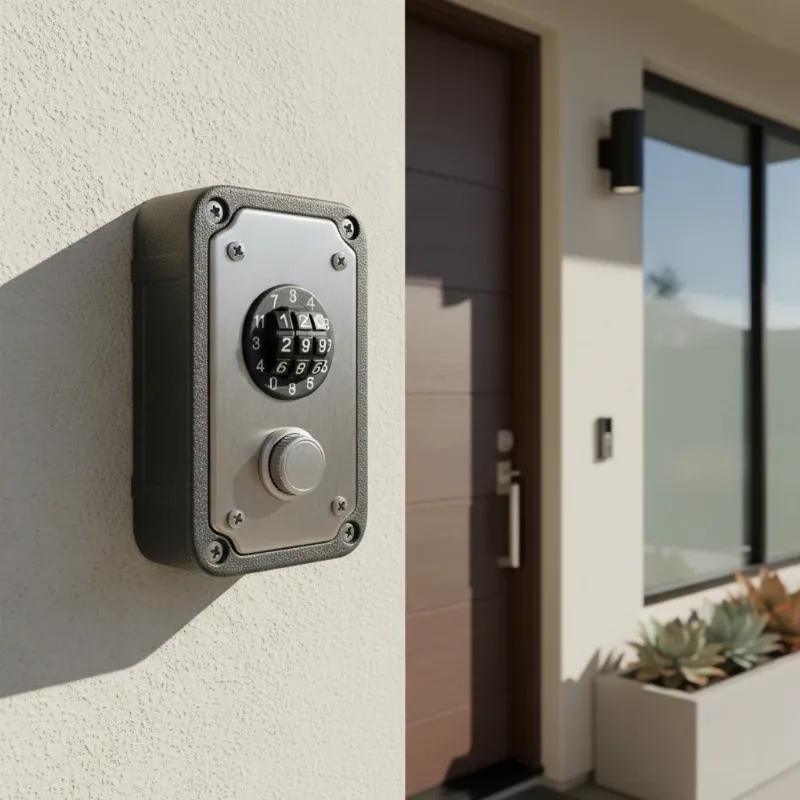 A sturdy wall-mounted key lockbox with a combination dial, offering a secure alternative for spare key storage.
Choosing the Right Smart Lock for Your Home
Selecting the ideal smart lock involves considering several factors to ensure it meets your specific security needs and lifestyle.
- Security Features: Look for robust encryption, tamper alarms, and a strong physical build. Ensure it uses high-quality locking mechanisms.
- Connectivity: Decide whether Bluetooth, Wi-Fi, Z-Wave, or Zigbee best suits your smart home ecosystem and remote access needs.
- Installation: Some smart locks are DIY-friendly, while others might require professional installation, especially for full replacement models.
- Budget: Prices vary widely based on features and brand. Determine a budget that aligns with the level of security and convenience you desire.
- Compatibility: Check if the lock works with your existing door type, thickness, and bore holes. Also, consider compatibility with your current smart home hub or voice assistants like Alexa or Google Assistant.
- User Reviews: Read feedback from other users to gauge reliability and real-world performance.
Maintaining Your Smart Lock for Optimal Security
Like any technology, smart locks require periodic attention to ensure they operate smoothly and remain secure.
- Regular Software Updates: Manufacturers frequently release software updates to improve performance and patch security vulnerabilities. Always install these promptly.
- Battery Management: Smart locks run on batteries. Pay attention to low-battery warnings and replace batteries proactively to avoid being locked out.
- Strong Passwords and PINs: Use complex, unique passcodes for keypads and strong passwords for your Wi-Fi network and smart lock apps. Change them regularly.
- Secure User Management: Regularly review who has access codes or digital keys and revoke access for anyone who no longer needs it.
- Physical Maintenance: Keep the lock clean and ensure moving parts are free from debris. Lubricate if necessary according to manufacturer guidelines.
Conclusion
The outdated habit of hiding keys under the doormat or in other obvious spots is a dangerous gamble with your home’s security. In a world where digital threats and opportunistic crime are prevalent, relying on such an easily compromised method is simply not worth the risk. By understanding the vulnerabilities and embracing the power of modern home security solutions, you can significantly enhance your protection.
Smart locks, secure lockboxes, and trusted key holders offer far superior alternatives, blending seamless convenience with robust security. They provide peace of mind, knowing that your home is protected by technology designed to keep intruders out, not invite them in. Make the smart choice today and upgrade your home’s access to a system that truly protects what matters most.
Ready to secure your home with intelligent access solutions? Explore the latest smart locks and keyless entry systems to find the perfect fit for your needs.
Frequently Asked Questions
Is a smart lock truly more secure than a traditional lock with a hidden key?
Yes, a smart lock is generally much more secure than a traditional lock paired with a hidden key. Smart locks eliminate the most common vulnerability—a physical key easily found by burglars. They offer features like encrypted access, real-time alerts, remote monitoring, and the ability to instantly revoke access codes, providing layers of protection a hidden physical key simply cannot match.
What if my smart lock runs out of battery?
Most smart locks are designed with backup power solutions or alerts. They typically provide ample warning when batteries are low, giving you time to replace them. Many also include a physical key override, a port for a 9V battery jump-start, or a USB power input as an emergency backup, ensuring you’re never completely locked out.
Can smart locks be hacked?
While no electronic device is entirely immune to hacking, reputable smart lock manufacturers employ robust encryption and security protocols to make their products highly resilient. Keeping your smart lock’s firmware updated, using strong Wi-Fi network security, and choosing complex PINs significantly minimizes the risk of unauthorized digital access. The threat of a physical key being found is often far greater than a smart lock being hacked.