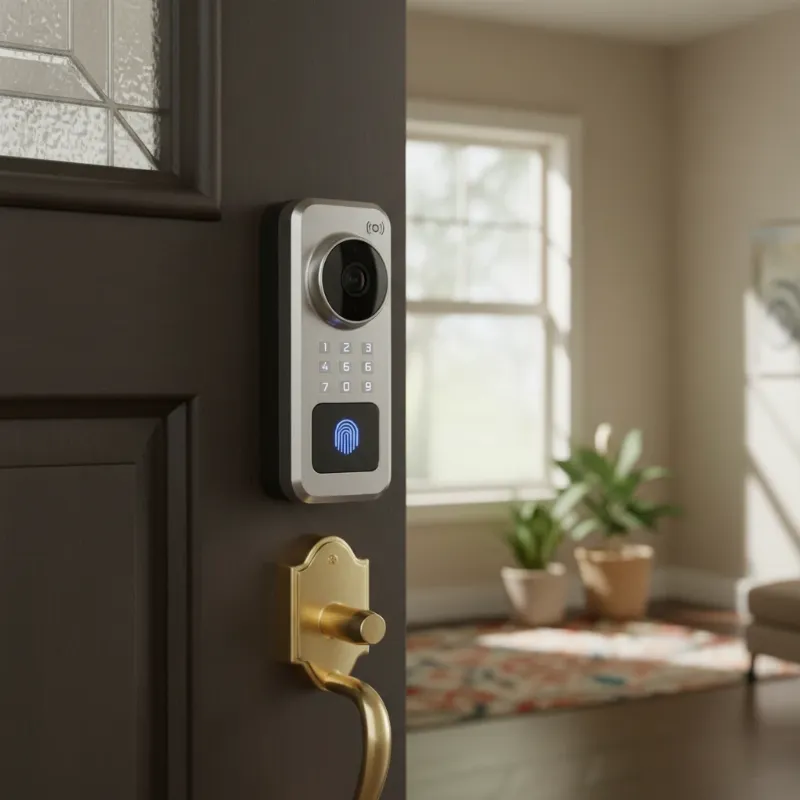
The world of door security has evolved dramatically, moving beyond simple keys and mechanical locks to embrace sophisticated electronic solutions. Today, smart locks and electric strikes offer enhanced security, convenience, and control, but understanding their distinct features and applications is crucial for making the right choice. Whether you’re securing a bustling commercial facility or a quiet residential home, selecting the optimal access control system requires careful consideration of your specific needs, budget, and desired level of integration. This comprehensive guide will explore the differences, advantages, and ideal use cases for both smart locks and electric strikes in both commercial and residential environments.
What Are Smart Locks?
Smart locks represent a significant leap in security technology, offering keyless entry and advanced management capabilities. These intelligent devices often integrate with smart home ecosystems, transforming how we interact with our entryways. They are electronic locking mechanisms that can be controlled remotely via a smartphone application, keypad, fingerprint scanner, facial recognition, or even voice commands, replacing traditional physical keys with digital credentials.
Modern smart locks typically connect to your home or office network using Wi-Fi, Bluetooth, Zigbee, or Z-Wave protocols, allowing for a wide range of functionalities beyond basic locking and unlocking. This connectivity enables features like remote access, activity logs, temporary guest codes, and integration with other smart devices such as security cameras and alarm systems. Their development has been driven by the desire for greater convenience and control, moving from simple keypad entry to sophisticated, interconnected security hubs.
What Are Electric Strikes?
An electric strike is an electromechanical door locking device designed to enhance the security and control of an existing mechanical lock. Unlike a full lock replacement, an electric strike replaces the standard strike plate in the door frame, working in conjunction with the door’s current lockset, such as a cylindrical lock, mortise lock, or panic bar. When activated by an access control system, it electrically releases the latch bolt, allowing the door to open without manually turning the handle.
A critical distinction for electric strikes is their operational behavior during power outages: fail-safe or fail-secure. A fail-safe electric strike unlocks when power is lost, typically chosen for emergency exits where free egress is paramount for safety. Conversely, a fail-secure electric strike remains locked when power is interrupted, making it suitable for areas where maintaining security during a power failure is the highest priority. This flexibility allows them to meet various security and safety requirements across diverse settings.
Key Differences: Smart Locks vs. Electric Strikes
Understanding the fundamental distinctions between smart locks and electric strikes is vital for selecting the appropriate security solution. While both provide electronic access control, their underlying mechanisms, installation requirements, and functional scopes differ significantly. Smart locks generally replace the entire locking mechanism, such as a deadbolt, offering a comprehensive and integrated security device. Electric strikes, on the other hand, modify the door frame to control the existing mechanical lock’s latch, acting as an enhancement rather than a full replacement.
Installation complexity also varies; smart locks can sometimes be a DIY project for retrofitting, though advanced smart home integration often benefits from professional setup. Electric strikes, conversely, frequently require precise cutting into the door frame for proper alignment and functionality, typically necessitating professional installation. Moreover, smart locks usually incorporate features like remote control, user activity logs, and smart home integration, while electric strikes primarily offer electrified latch release, working as a component within a broader access control system.
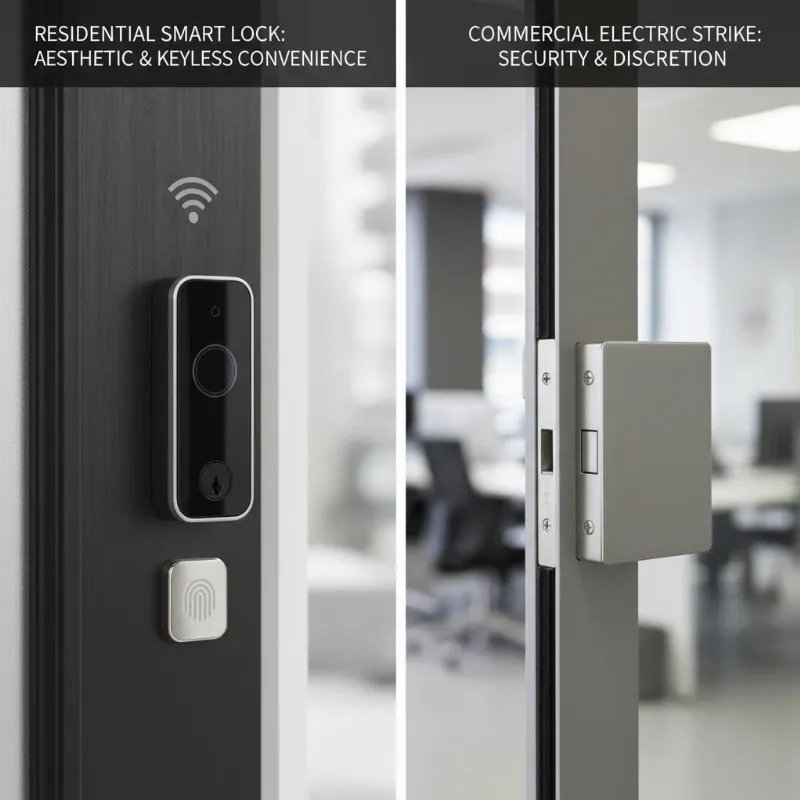 Comparing a sleek smart lock with a traditional door and an electric strike installed in a door frame, highlighting their visual and functional differences in access control.
Smart Locks: Ideal for Residential and Commercial Settings
Smart locks offer a blend of convenience, security, and technological sophistication that appeals to both homeowners and businesses looking for modern access solutions. They provide a streamlined way to manage entry without the hassle of physical keys, making them a popular choice in today’s interconnected world.
Advantages of Smart Locks
|
Our Picks for the Best smart locks in 2026
As an Amazon Associate I earn from qualifying purchases.
|
||
| Num | Product | Action |
|---|---|---|
| 1 | ULTRALOQ U-Bolt Pro WiFi Smart Lock with Door Sensor, 8-in-1 Keyless Entry Door Lock with Fingerprint ID, App Remote Control, Built-in WiFi Keypad Deadbolt, Auto Unlock, IP65 Waterproof, Easy Install |

|
| 2 | Tapo Smart Wi-Fi Deadbolt Door Lock – Keyless Tactile Buttons, Customized Access with in-App Monitoring, Auto-Lock, IP54 Weatherproof, BHMA Grade 3, Compatible with Standard Door Sizes, Tapo DL100 |
|
| 3 | Wyze Auto-Lock Bolt v2, Fingerprint Keyless Entry Smart Lock, AI Learning Scanner with Wi-Fi Front Door Lock Deadbolt, Auto-Lock, 8 Months Battery, BHMA2, IP53, Anti-Peep Keypad, Backup Keys |
|
| 4 | Smart Door Handle Lock with Keypad: Yamiry Fingerprint Smart Knob - Keyless Entry Digital Lock for Front Door - Deadbolt with APP - Generate Passcode Remotely - DIY Installation |
|
| 5 | Wyze Palm Lock, Smart Door Lock with Palm Vein Recognition, Keyless Entry Smart Locks for Front Door, Keypad, Auto Lock, Dual Battery, Wi-Fi, Works with Alexa & Google, BHMA, IP53, Mechanical Key |
|
| 6 | TEEHO TE001 Keyless Entry Door Lock with Keypad - Smart Deadbolt Lock for Front Door with 2 Keys - Auto Lock - Easy Installation - Matte Black |
|
| 7 | Schlage Encode Smart WiFi Deadbolt Lock for Front Door - Keyless Entry with App or Touchscreen - Works with Alexa, Hey Google, & Airbnb - Create Codes for Guests - Satin Nickel Silver |
|
| 8 | Yale Security Assure Lock 2 Deadbolt, Black Suede Keyed Smart Entry Door Lock with Wi-Fi Connected Keypad for Code Entry and Remote Access, YRD410-WF1-BSP |
|
| 9 | Smart Door Lock with Camera Fingerprint Keyless Entry Door Lock Electronic Deadbolt with Keypad Code, App Remote Control, Auto Unlock for Front Door |
|
| 10 | Schlage Encode Smart WiFi Deadbolt Lock for Front Door - Keyless Entry with App or Touchscreen - Works with Alexa, Hey Google, & Airbnb - Create Codes for Guests - Matte Black |
|
Smart locks bring a host of benefits that traditional locks simply cannot match. Keyless entry, through methods like keypads, biometric scanners (fingerprint, facial recognition), or smartphone apps, eliminates the risk of lost keys and simplifies access. Remote control allows users to lock or unlock doors from anywhere, grant temporary access to visitors, or check the lock status, providing immense peace of mind. Many smart locks offer enhanced security features such as real-time alerts for unusual activity, tamper alarms, and detailed activity logs, giving you a comprehensive overview of who enters and exits your property and when. Their ability to integrate seamlessly with smart home systems means you can link them with lighting, thermostats, and security cameras for a truly automated and responsive environment. Beyond functionality, smart locks often boast sleek, modern designs that can enhance the aesthetic appeal of any door.
Disadvantages of Smart Locks
Despite their many advantages, smart locks do come with certain drawbacks that users should consider. Their reliance on power, whether from batteries or an electrical connection, means they are susceptible to outages or dead batteries, though most offer mechanical key backups. As with any internet-connected device, smart locks can be exposed to cybersecurity risks, including hacking attempts, which necessitates strong passwords and regular software updates. The initial investment for smart locks is typically higher than for traditional locks or basic electric strikes, especially for advanced models with extensive features. Furthermore, connectivity issues, such as Wi-Fi disruptions or Bluetooth range limitations, can sometimes hinder their functionality, causing temporary inconvenience.
Residential Applications
In residential settings, smart locks are particularly well-suited for front doors, garages, and side entries, offering homeowners unparalleled convenience and control. They allow families to grant temporary access to pet sitters, house cleaners, or guests without sharing physical keys, and parents can receive notifications when children arrive home from school. For rental properties, smart locks simplify tenant turnover by allowing landlords to remotely change access codes instead of rekeying locks. Their integration with smart home hubs enables automated routines, such as unlocking the door as you approach or turning on lights when the door is opened.
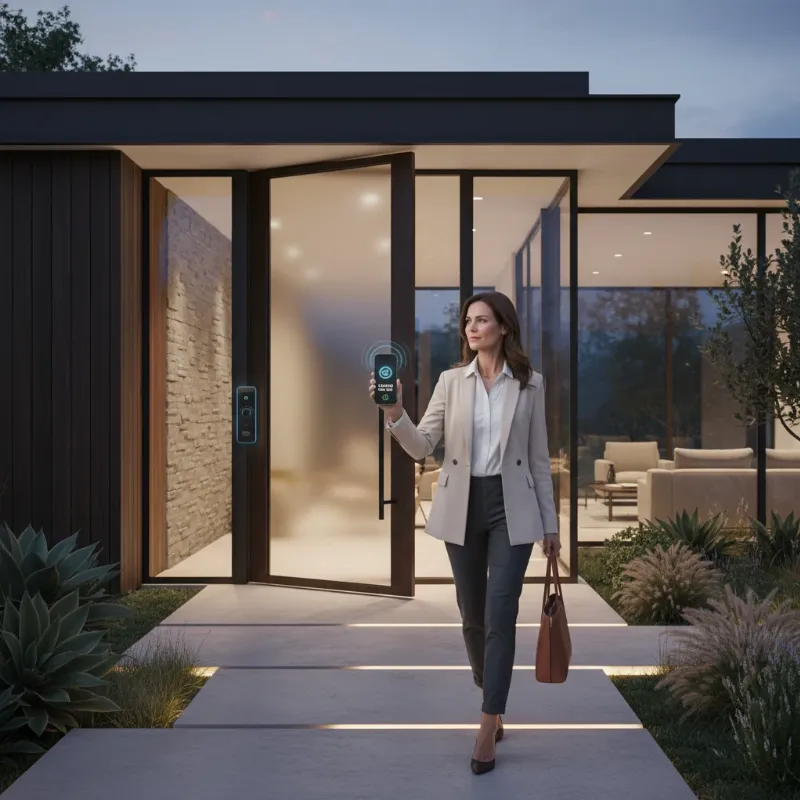 A homeowner effortlessly unlocking their smart lock with a smartphone, illustrating the convenience and modern appeal for residential use.
Commercial Applications
For commercial properties, smart locks provide flexible and scalable access control solutions, especially for office suites, co-working spaces, and multi-tenant buildings. Businesses can easily manage employee access permissions, set time-restricted entry schedules, and revoke access instantly for former staff. The ability to monitor entry and exit logs helps track building occupancy and enhances overall security auditing. While not always the primary choice for main perimeter doors of large complexes (where electric strikes or mag locks might be preferred for heavy traffic and fire codes), smart locks excel in internal office doors or managing specific department access where advanced user management is beneficial.
Electric Strikes: Suited for Specific Commercial & Residential Needs
Electric strikes offer a robust and often more cost-effective method of electrifying existing doors, making them highly versatile for various security requirements. Their ability to integrate with existing mechanical hardware makes them a popular choice where retrofitting is preferred over complete lock replacement.
Advantages of Electric Strikes
Electric strikes are a highly adaptable solution, offering significant advantages, particularly in commercial environments. One of their key benefits is cost-effectiveness, as they are generally more affordable to purchase and install than full electric locks or comprehensive smart lock systems, especially when upgrading existing doors. They boast excellent compatibility with a wide array of existing mechanical locksets, including cylindrical, mortise, and rim locks, allowing for the electrification of traditional doors without extensive overhauls. Built for durability, electric strikes can withstand heavy traffic, making them ideal for busy commercial entryways. Their flexibility in being configured as either fail-safe or fail-secure is crucial for meeting specific safety and security codes, ensuring doors either unlock or remain locked during power outages. Furthermore, electric strikes often allow for “free egress,” meaning occupants can always exit simply by turning the door handle from the inside, a vital feature for fire safety and emergency evacuation.
Disadvantages of Electric Strikes
While offering many benefits, electric strikes also present certain challenges, particularly concerning installation and the scope of their security. The installation process can be complex and intrusive, often requiring precise cutting into the door frame to ensure proper fit and alignment with the existing lockset. This usually necessitates professional installation and can add to labor costs. Because electric strikes only control the latch bolt of an existing lock, they may not offer the same comprehensive level of security as a full electric lock or a smart deadbolt, especially in very high-security areas. Their primary function is to enable electronic release of the latch, meaning they don’t inherently provide advanced features like activity logs or smart home integration without a separate, integrated access control system. Aesthetically, electric strikes are often more utilitarian and can be visible within the door frame, potentially not blending as seamlessly with modern door designs as some smart locks. Lastly, they typically require additional hardware, such as an external access control system (keypad, card reader, intercom), to function fully, as they don’t operate as standalone access solutions.
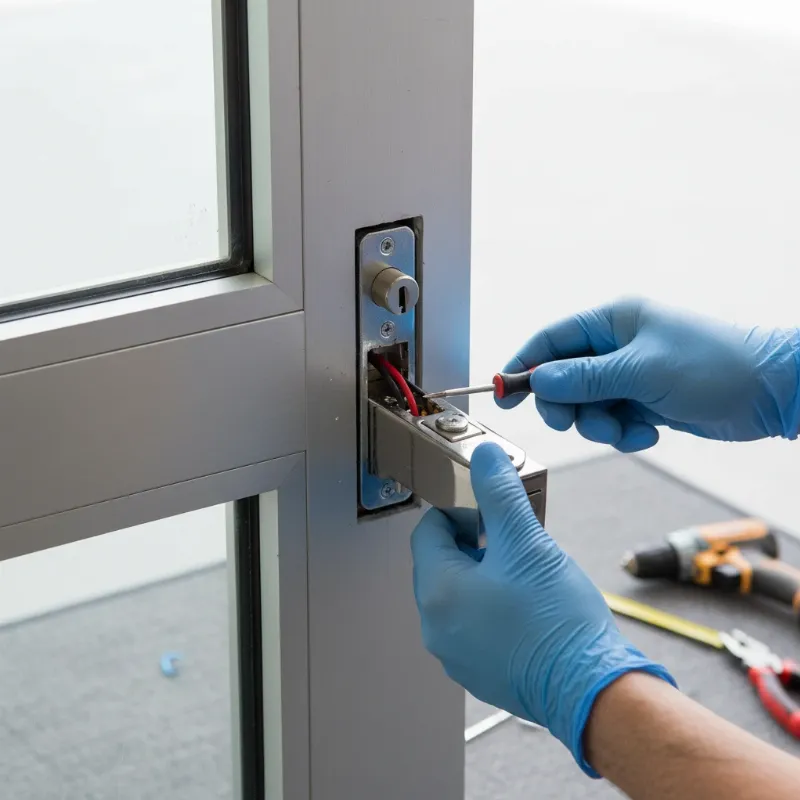 A locksmith installing an electric strike into a commercial door frame, emphasizing the integration with existing hardware and the professional installation aspect.
Residential Applications
While less common for single-family homes, electric strikes find suitable residential applications primarily in multi-unit dwellings like apartment complexes or gated communities. They are frequently integrated into main entrance doors, allowing tenants to remotely grant access to visitors through an intercom or buzzer system. For shared spaces or gates, an electric strike provides a cost-effective way to add controlled access without replacing robust existing mechanical locks. However, for an individual homeowner, the complexity of installation and the need for an accompanying access control system (which is often overkill for a single residential door) usually make smart locks a more practical and user-friendly choice.
Commercial Applications
Electric strikes truly shine in commercial environments, where they are widely adopted for their reliability and compatibility. They are excellent for high-traffic entry points in office buildings, schools, and hospitals, allowing efficient access control for employees, students, or authorized personnel via keycards, fobs, or keypads. For perimeter doors and restricted areas like server rooms or supply closets, fail-secure electric strikes provide robust security, ensuring doors remain locked even during power outages. Their seamless integration with various access control systems, including alarm and surveillance setups, makes them a fundamental component of comprehensive building security strategies, offering flexible management of who can enter, and when.
Comparison Table: Smart Locks vs. Electric Strikes
Choosing between smart locks and electric strikes depends heavily on your specific environment and security priorities. This table highlights their key differentiating features:
| Feature | Smart Locks | Electric Strikes |
|---|---|---|
| Mechanism | Full lock, replaces deadbolt or existing hardware | Electrically controls existing latch bolt |
| Primary Application | Residential & Modern Commercial | Commercial (often high-traffic, regulated) |
| Installation | Varies (DIY friendly to professional for full system) | Often requires frame modification, professional recommended |
| Security Level | High (full lock control, advanced features) | Good (controls latch, works with existing lock) |
| Power Dependency | Batteries/AC, usually fail-safe (with mechanical key backup) | AC, configurable fail-safe/fail-secure |
| Cost | Higher initial investment | Generally lower initial cost for basic models |
| Connectivity | Wi-Fi, Bluetooth, Zigbee, Z-Wave (Smart Home) | Wired to access control system |
| Aesthetics | Modern, integrated designs | Often concealed within frame, utilitarian |
| Keyless Entry | Yes (code, app, biometrics, etc.) | Yes (via integrated access control system) |
| Remote Access | Yes (via app) | Yes (via integrated access control system) |
How to Choose: Commercial vs. Residential Considerations
Making the right choice between smart locks and electric strikes requires a thoughtful assessment of several factors unique to your property. Consider the specific security needs of your space; do you require a high-security solution for sensitive data or a more convenient system for family members? Your budget is also a significant factor, as smart locks typically entail a higher upfront cost for advanced features, while electric strikes can be more economical for electrifying existing doors.
Evaluate your existing infrastructure and door types, as electric strikes often require modifications to the door frame, whereas many smart locks offer simpler retrofit options. Traffic flow and emergency egress requirements are paramount, especially in commercial settings where fail-safe options might be mandated by fire codes. Think about your desired level of integration; do you need seamless smart home connectivity or a robust commercial access control system? Finally, aesthetics play a role, as smart locks offer modern designs that may complement a contemporary home or office, while electric strikes are often more discreetly installed.
Future Trends in Door Security
The future of door security is dynamic, driven by rapid advancements in technology. We can anticipate deeper integration of artificial intelligence (AI) into smart locks, enabling predictive security measures, enhanced anomaly detection, and even more sophisticated biometric authentication methods like advanced facial recognition and gait analysis. These AI capabilities will lead to more intelligent systems that learn user patterns and proactively identify potential threats.
Furthermore, the connection between smart locks and broader smart home and building ecosystems will become even more seamless, allowing for unified control over all aspects of property management and security. Emerging technologies like blockchain may also play a role in enhancing the security and immutability of access logs, providing a tamper-proof record of entry and exit events. Expect new features such as voice recognition for access, gesture-based unlocking, and self-powering mechanisms that reduce reliance on batteries or external power. These innovations promise to make door security more intuitive, intelligent, and impenetrable.
“A truly smart lock doesn’t just secure a door; it intelligently manages access, integrates with your lifestyle, and provides adaptive security that evolves with technology.”
Conclusion
The journey through the world of modern door security reveals two powerful contenders: smart locks and electric strikes. Each offers distinct advantages tailored to specific needs, whether you’re prioritizing ultimate convenience for a residential property or robust access control for a commercial facility. Smart locks excel in offering keyless entry, remote management, and seamless smart home integration, making them ideal for modern living and specific commercial applications that value user experience and comprehensive digital oversight. Electric strikes, on the other hand, provide a highly effective and often more budget-friendly method to electrify existing doors, offering crucial fail-safe or fail-secure options essential for regulated commercial environments and high-traffic areas.
The optimal choice ultimately hinges on a thoughtful evaluation of your unique security requirements, budget, installation considerations, and the desired level of integration with your broader security or smart home system. By understanding the core differences and specialized applications of smart locks and electric strikes, you can confidently select the solution that best fortifies your property, offering both enhanced security and unparalleled peace of mind. Are you ready to upgrade your security and experience the next generation of door access control?
Frequently Asked Questions
Are smart locks more secure than traditional locks?
Yes, smart locks generally offer enhanced security over traditional mechanical locks due to features like keyless entry (eliminating physical key vulnerabilities), remote monitoring, activity logs, and tamper alerts. Many also include advanced encryption and multi-factor authentication, though cybersecurity remains a consideration.
Can electric strikes be used on residential doors?
While primarily designed for commercial use, electric strikes can be used in residential settings, most commonly for multi-unit apartment building entrances or gates where remote entry via an intercom is desired. For single-family homes, they are less common due to installation complexity and the need for additional access control hardware, making smart locks often a more practical choice.
What is the difference between fail-safe and fail-secure?
Fail-safe means the lock unlocks automatically when power is lost, ensuring free egress during emergencies. Fail-secure means the lock remains locked when power is lost, maintaining security during outages. The choice depends on specific safety regulations and security priorities for the door’s function.
Do smart locks work during power outages?
Most smart locks are designed with backup power options, typically using standard batteries, to ensure functionality during power outages. Many also include a traditional key override as a last resort, allowing manual operation even if the electronic components fail.
How do electric strikes integrate with access control systems?
Electric strikes integrate with access control systems (like keypads, card readers, or biometric scanners) by receiving an electrical signal that momentarily releases the latch, allowing the door to open. They act as the physical locking component, controlled by the electronic signals from the access system.