Are you still fumbling for keys or wondering if you locked the front door after you’ve left for the day? In an increasingly connected world, traditional deadbolts, while reliable, often leave homeowners longing for greater control and peace of mind. The rapid advancement of smart home technology has revolutionized our daily lives, and door security is no exception. Deciding between a smart lock and a traditional deadbolt is a crucial choice that impacts your home’s safety and your daily convenience. Let’s delve into the key differences, benefits, and drawbacks of each to help you determine if it’s time for an upgrade.
What is a Smart Lock?
A smart lock is an electronic-mechanical device that allows for keyless access and often integrates with smart home systems. Unlike conventional locks that rely solely on physical keys, smart locks offer a variety of entry methods, including PIN codes, fingerprints, facial biometrics, smartphone apps, or even voice commands. These innovative devices leverage technologies like Bluetooth and Wi-Fi to provide homeowners with remote control and monitoring capabilities, transforming how we secure our living spaces.
Historically, door locks were purely mechanical. The evolution of smart locks began with simple electronic keypads, gradually incorporating wireless communication and advanced biometric scanners. Today, they represent a significant leap forward, offering sophisticated features that extend far beyond basic locking and unlocking.
Superior Advantages of Smart Locks
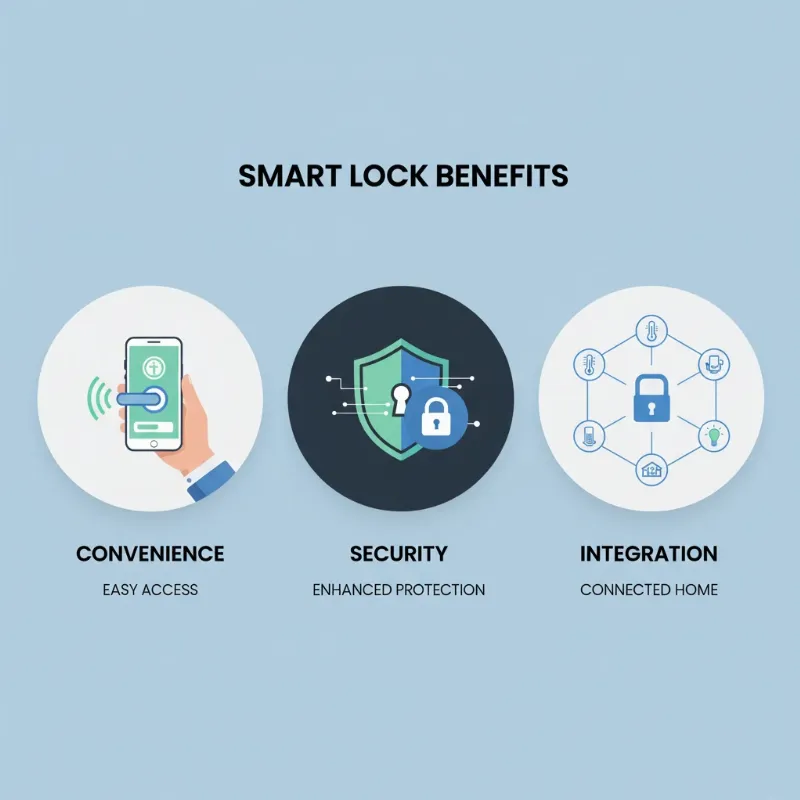
Smart locks bring a host of benefits that traditional deadbolts simply cannot match, primarily focusing on convenience, enhanced security, and seamless integration into a modern smart home ecosystem.
Convenience and Ease of Use
|
Our Picks for the Best smart locks in 2026
As an Amazon Associate I earn from qualifying purchases.
|
||
| Num | Product | Action |
|---|---|---|
| 1 | Wyze Auto-Lock Bolt v2, Fingerprint Keyless Entry Smart Lock, AI Learning Scanner with Wi-Fi Front Door Lock Deadbolt, Auto-Lock, 8 Months Battery, BHMA2, IP53, Anti-Peep Keypad, Backup Keys |

|
| 2 | Tapo Smart Wi-Fi Deadbolt Door Lock – Keyless Tactile Buttons, Customized Access with in-App Monitoring, Auto-Lock, IP54 Weatherproof, BHMA Grade 3, Compatible with Standard Door Sizes, Tapo DL100 |
|
| 3 | Wyze Palm Lock, Smart Door Lock with Palm Vein Recognition, Keyless Entry Smart Locks for Front Door, Keypad, Auto Lock, Dual Battery, Wi-Fi, Works with Alexa & Google, BHMA, IP53, Mechanical Key |
|
| 4 | Schlage Encode Smart WiFi Deadbolt Lock for Front Door - Keyless Entry with App or Touchscreen - Works with Alexa, Hey Google, & Airbnb - Create Codes for Guests - Satin Nickel Silver |
|
| 5 | TEEHO TE001 Keyless Entry Door Lock with Keypad - Smart Deadbolt Lock for Front Door with 2 Keys - Auto Lock - Easy Installation - Matte Black |
|
| 6 | ULTRALOQ U-Bolt Pro WiFi Smart Lock with Door Sensor, 8-in-1 Keyless Entry Door Lock with Fingerprint ID, App Remote Control, Built-in WiFi Keypad Deadbolt, Auto Unlock, IP65 Waterproof, Easy Install |
|
| 7 | Smart Door Handle Lock with Keypad: Yamiry Fingerprint Smart Knob - Keyless Entry Digital Lock for Front Door - Deadbolt with APP - Generate Passcode Remotely - DIY Installation |
|
| 8 | Smart Door Lock with Camera Fingerprint Keyless Entry Door Lock Electronic Deadbolt with Keypad Code, App Remote Control, Auto Unlock for Front Door |
|
| 9 | Schlage Encode Smart WiFi Deadbolt Lock for Front Door - Keyless Entry with App or Touchscreen - Works with Alexa, Hey Google, & Airbnb - Create Codes for Guests - Matte Black |
|
| 10 | Yale Security Assure Lock 2 Deadbolt, Black Suede Keyed Smart Entry Door Lock with Wi-Fi Connected Keypad for Code Entry and Remote Access, YRD410-WF1-BSP |
|
One of the most compelling advantages of smart locks is the unparalleled convenience they offer. Imagine arriving home with arms full of groceries and unlocking your door with a simple fingerprint scan, a code, or even a voice command, without ever needing a physical key. Many smart locks also feature auto-locking capabilities, ensuring your door is secured automatically after a set period or when your security system is armed, eliminating the nagging worry of forgetting to lock up.
Enhanced Security
While traditional deadbolts offer physical robustness, smart locks introduce layers of digital security. Many models include features like tamper alarms that alert you to forced entry attempts, real-time activity logs to track who enters and exits your home, and two-factor authentication for added protection. Some advanced smart locks incorporate rapid fingerprint recognition, facial recognition, or even palm vein scanning, making them significantly harder to bypass than traditional locks, which can be vulnerable to picking or bumping techniques. Furthermore, the ability to grant temporary access codes means you never have to worry about lost or duplicated physical keys compromising your home’s security.
Smart Features
The true power of smart locks lies in their connectivity. They can seamlessly integrate with your existing smart home system, working in harmony with security cameras, smart lighting, and alarm systems. This integration allows for sophisticated automations, such as your lights turning on when the door unlocks or your alarm activating when you leave and the lock engages. Remote access, enabled by Wi-Fi or Bluetooth, means you can lock or unlock your door from anywhere in the world using your smartphone, a particularly useful feature for letting in guests, pet sitters, or service providers when you’re away.
Modern Design and Variety
Smart locks often boast sleek, modern designs that can complement any home aesthetic. They come in a variety of styles and finishes, offering more choices for homeowners who prioritize both functionality and appearance.
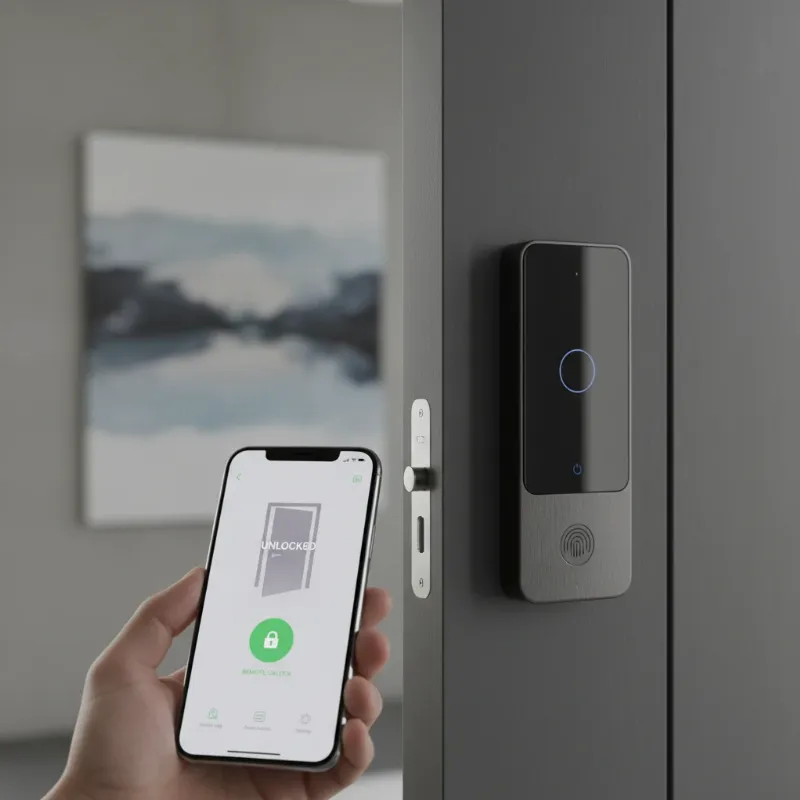 A sleek, modern smart lock with a digital keypad and a homeowner's smartphone, showcasing remote access capabilities.
Popular Types of Smart Locks on the Market
The smart lock market offers a diverse range of options, each with its unique unlocking method and connectivity. Understanding these types can help you choose the best fit for your needs.
-
Fingerprint Locks: These locks use biometric scanners to grant access based on registered fingerprints.
- Pros: Highly convenient, no keys or codes to remember, difficult to bypass with unauthorized fingerprints.
- Cons: Can sometimes be finicky with wet or dirty fingers, some models might have slower recognition, higher cost.
- Brands: Yale, ULTRALOQ, Samsung.
-
Keypad/Code Locks: These locks feature a physical or touchscreen keypad where users enter a unique PIN code.
- Pros: Easy to share access with temporary codes, no physical keys needed, generally more affordable than biometric options.
- Cons: Codes can be forgotten or compromised, keypads can show wear patterns over time indicating frequently used digits, requires battery power.
- Brands: Schlage, Kwikset, Yale.
-
Key Card Locks (RFID/NFC): Similar to hotel room keys, these locks use proximity cards for entry.
- Pros: Quick and easy access with a tap, convenient for multiple users (e.g., family members, staff), cards can be easily deactivated if lost.
- Cons: Cards can be lost or stolen, still requires carrying a physical item, typically used in commercial or multi-unit residential settings more than single-family homes.
-
Bluetooth Smart Locks: These locks connect to your smartphone via Bluetooth, allowing you to unlock when within a short range (typically 20-30 feet).
- Pros: Don’t necessarily require a Wi-Fi connection, consume less power than Wi-Fi locks, good for local control.
- Cons: Limited remote access unless paired with a separate Wi-Fi bridge or hub, range limitations.
- Brands: August, Level, Danalock.
-
Wi-Fi Smart Locks: These locks connect directly to your home’s Wi-Fi network, enabling remote control from virtually anywhere with an internet connection.
- Pros: Full remote access and monitoring, seamless integration with cloud-based smart home systems.
- Cons: Higher power consumption requiring more frequent battery changes, dependence on a stable Wi-Fi network, generally higher cost.
- Brands: August, Schlage Encode, eufy.
-
Facial Recognition Locks: These advanced locks use camera technology to identify authorized individuals by their facial features.
- Pros: Extremely convenient and hands-free, high level of security.
- Cons: Very high cost, potential privacy concerns, performance can be affected by lighting conditions, less common for residential use currently.
- Brands: Lockly (Visage Zeno Series).
Comparison Table: Smart Lock vs. Traditional Deadbolt
To help visualize the differences, here’s a direct comparison of key features:
| Feature | Smart Lock | Traditional Deadbolt |
|---|---|---|
| Security | High (encryption, alarms, logs, biometrics, 2FA) | Moderate to High (physical strength, Grade ratings) |
| Convenience | Very High (keyless entry, remote access, auto-lock) | Low (physical key required) |
| Access Control | Multiple user codes, temporary access, activity logs | Limited (physical key copies) |
| Connectivity | Bluetooth, Wi-Fi, Z-Wave, Zigbee (smart home integration) | None (standalone mechanical) |
| Power Source | Batteries or electricity | None (mechanical operation) |
| Cost (Initial) | Medium to High ($100-$500+) | Low to Medium ($50-$150) |
| Vulnerabilities | Hacking, battery failure, technical glitches | Lockpicking, bumping, lost keys |
| Installation | May require more setup/technical knowledge | Generally simpler installation |
How to Choose the Right Smart Lock for Your Home
Choosing the ideal smart lock involves carefully assessing your specific needs and priorities. It’s not just about selecting the newest technology; it’s about finding the security solution that best fits your lifestyle and home environment.
Determine Your Security Needs
Consider the level of security required for your home. If you live in a high-risk area or frequently travel, advanced smart lock features like tamper alarms, two-factor authentication, and robust activity logging can provide crucial peace of mind. For areas with lower risk, a simpler, more affordable smart lock might suffice. Remember, while digital security adds a layer of protection, the physical strength of the deadbolt mechanism itself is still paramount. Look for locks with high ANSI (American National Standards Institute) or BHMA (Builders Hardware Manufacturers Association) grades for superior security and durability.
Prioritize Convenience Features
Think about your daily routine. Do you often come home with your hands full? Do you need to grant access to family, friends, or service providers when you’re not home? Keyless entry options such as fingerprint, keypad, or smartphone control can significantly enhance convenience. Remote access through Wi-Fi connectivity is invaluable for managing your door from anywhere, a stark contrast to the limitations of a physical key.
Set a Realistic Budget
Smart locks generally have a higher upfront cost than traditional deadbolts, ranging from around $100 to upwards of $500 for advanced models. Factor in potential professional installation costs, which can add to the total investment. However, consider the long-term value: smart locks can eliminate the ongoing expense and hassle of rekeying or replacing lost physical keys.
Assess Your Technical Comfort Level
Are you comfortable with technology, smartphone apps, and occasional troubleshooting? Smart locks require some familiarity with digital interfaces, network connectivity, and potentially software updates. If you prefer a “set it and forget it” approach without digital dependencies, a traditional deadbolt or a simpler electronic keypad lock might be more suitable. Most smart locks offer mechanical key backups, mitigating concerns about power outages or Wi-Fi issues.
Research Reputable Brands and Read Reviews
Investigate well-known brands like Philips, Yale, Samsung, Schlage, and Kwikset, which are recognized for their quality and reliability. Always read reviews from other users and consult expert opinions to understand real-world performance, durability, and customer support experiences. Checking warranty policies and technical support options is also crucial for long-term satisfaction.
 A family reviewing different smart lock options on a tablet, with a stylized smart home interior in the background, symbolizing thoughtful decision-making.
Tips for Using and Maintaining Your Smart Lock
To ensure your smart lock operates reliably and securely for years to come, proper usage and maintenance are essential.
- Regular Battery Replacement/Recharging: Most smart locks are battery-powered. Monitor battery levels through the accompanying app and replace or recharge batteries proactively to avoid unexpected lockout situations. Many models offer low battery warnings.
- Keep Software Updated: Regularly check for and install firmware updates. These updates often include critical security patches and performance improvements, protecting your lock from emerging vulnerabilities.
- Clean Regularly: Dust and grime can affect the functionality of keypads and fingerprint sensors. Gently clean your smart lock’s exterior with a soft, dry cloth to ensure optimal performance. Avoid harsh chemicals.
- Strong Passcodes and Biometric Registration: If using a keypad, choose complex, non-obvious PIN codes and change them periodically. For fingerprint locks, ensure multiple prints are registered clearly for reliable access.
- Secure Your Wi-Fi Network: Since many smart locks connect to your home Wi-Fi, ensure your network is secured with a strong, unique password and up-to-date encryption protocols.
- Utilize Physical Key Backup: Most smart locks include a traditional key cylinder as a backup. Keep this key in a secure, easily accessible location outside your home (not under the doormat!) for emergencies like battery failure or technical glitches.
- Professional Installation (if needed): While many smart locks are DIY-friendly, consider professional installation if you’re unsure, especially for integrating with complex smart home systems.
- Review Activity Logs: Periodically check your lock’s activity logs to monitor access and identify any unusual patterns.
Common Smart Lock Issues and Troubleshooting
Even with advanced technology, smart locks can encounter occasional glitches. Here are some common problems and how to address them:
-
Lock Not Responding to App/Commands:
- Check Battery: The most common culprit is a depleted battery. Replace or recharge it.
- Wi-Fi/Bluetooth Connectivity: Ensure your home Wi-Fi network is active and stable, or that your phone is within Bluetooth range. Restart your router if necessary.
- App Glitch: Close and reopen the lock’s companion app, or reinstall it if the issue persists.
- Restart Lock: Many smart locks can be restarted by temporarily removing and reinserting the batteries.
-
Fingerprint Reader Not Working:
- Clean Sensor: Ensure the sensor is clean and dry, and your finger is also clean.
- Re-register Fingerprint: If problems persist, try deleting and re-registering your fingerprint in the app.
- Environmental Factors: Extreme temperatures or humidity can sometimes affect biometric readers.
-
Keypad Issues (Buttons Unresponsive, Code Not Working):
- Check Battery: Low battery can cause unresponsive keypads.
- Incorrect Code: Double-check you are entering the correct code.
- Reset Code: If you suspect the code is corrupted or forgotten, use the app or master code to reset it.
- Keypad Wear: If certain digits are worn, consider a new code or a lock replacement if the keypad is physically damaged.
-
Lock is Stuck or Won’t Engage/Disengage:
- Physical Obstruction: Check for any physical obstructions in the door frame or the bolt mechanism.
- Misalignment: Ensure the deadbolt and strike plate are properly aligned. This might require minor adjustments to the door or frame.
- Mechanical Backup: Use your physical key if the electronic mechanism is failing.
- Contact Support: If mechanical issues persist, it’s best to contact the manufacturer’s support or a professional locksmith.
-
Hacking Concerns:
- Strong Passwords: Use unique, complex passwords for your lock’s app and Wi-Fi network.
- Two-Factor Authentication (2FA): Enable 2FA if your lock supports it.
- Software Updates: Keep firmware updated to patch any known security vulnerabilities.
- Monitor Activity: Regularly review activity logs for unauthorized access attempts.
The Future Trends of Smart Locks
The landscape of smart locks is continuously evolving, promising even more sophisticated and integrated security solutions. We are moving beyond simple keyless entry towards truly intelligent access control.
- Artificial Intelligence (AI) Integration: Expect smart locks to incorporate more advanced AI for features like enhanced facial recognition, behavioral analysis (e.g., learning entry patterns to detect anomalies), and predictive maintenance by monitoring lock health.
- Deeper Smart Home Ecosystem Integration: Future smart locks will connect even more seamlessly with a wider array of smart devices, creating truly synchronized home automation experiences. Imagine your smart lock communicating with your thermostat, lighting, and security cameras to create a personalized “welcome home” or “away” scene.
- Blockchain Technology for Enhanced Security: The immutable and decentralized nature of blockchain could be leveraged to create highly secure, tamper-proof access records and to manage digital keys, offering an unprecedented level of trust and transparency in home security.
- Advanced Biometrics and Authentication: Beyond fingerprints and facial recognition, future locks may explore other biometric modalities like iris scanning, voice recognition with anti-spoofing measures, or even gait analysis for unique user identification.
- Energy Efficiency and Sustainable Power: Innovations in low-power wireless protocols and alternative power sources (like solar or kinetic energy harvesting) could extend battery life significantly, reducing maintenance and environmental impact.
- Contextual Awareness: Smart locks may become more contextually aware, understanding not just who is at the door, but why they are there, based on schedules, linked calendars, or even package delivery notifications, to grant access intelligently.
 A futuristic smart home entrance with an integrated, minimalist smart lock, glowing with intelligent ambient light, showcasing advanced security and automation.
Conclusion
Choosing between a smart lock and a traditional deadbolt ultimately depends on your individual needs, budget, and comfort with technology. While traditional deadbolts offer dependable, mechanical security, smart locks provide an unparalleled level of convenience, enhanced security features through digital layers, and seamless integration into the modern smart home. For those seeking effortless keyless entry, remote control, and real-time monitoring, the decision to upgrade to a smart lock is clear. The investment in a smart lock is not just about a new gadget; it’s an investment in a more secure, convenient, and connected future for your home.
Are you ready to unlock the potential of a smarter, safer home? Explore the latest smart lock innovations and find the perfect security solution to transform your entryway today!
Frequently Asked Questions
Are smart locks more secure than traditional locks?
Smart locks can offer enhanced security features over traditional deadbolts, such as encryption, multi-factor authentication (like fingerprint + PIN), tamper alarms, and activity logs. While traditional locks rely purely on mechanical strength, smart locks add digital protection. However, like any connected device, smart locks can be vulnerable to hacking if not properly secured with strong passwords and regular software updates.
What happens if a smart lock loses power or Wi-Fi?
Most smart locks are designed with backup options. They typically operate on batteries, and many models include a traditional key cylinder, allowing you to use a physical key in case of battery depletion or a power outage. Some may also have emergency power ports. Wi-Fi connectivity primarily enables remote features; the core locking mechanism usually functions locally even without an internet connection.
Can smart locks be easily hacked?
While the possibility of hacking exists for any connected device, reputable smart lock brands implement strong encryption and security protocols to minimize this risk. The likelihood of a smart lock being hacked is generally low, especially with good security practices like strong unique passwords, enabling two-factor authentication, and keeping the firmware updated. A well-installed, high-grade traditional deadbolt can be physically bypassed by determined intruders, similar to how a smart lock could theoretically be digitally compromised.
Is smart lock installation difficult?
The difficulty of smart lock installation varies. Many smart locks are designed for DIY installation, often replacing an existing deadbolt with minimal tools. However, some models or those requiring integration with complex smart home systems might benefit from professional installation to ensure correct functioning and optimal security.