In the evolving landscape of home security, smart locks stand as beacons of convenience and advanced protection. Yet, like any outdoor fixture, these sophisticated devices face a relentless adversary: rust and corrosion. For homeowners seeking to maintain the integrity and functionality of their smart security investments, understanding how to effectively combat these environmental threats is paramount. This guide provides an in-depth look at identifying, removing, and preventing rust and corrosion, ensuring your outdoor smart locks remain reliable and aesthetically pleasing for years to come.
The Unseen Threat: Why Outdoor Smart Locks Rust and Corrode
Outdoor smart locks are continuously exposed to elements that accelerate wear and tear, making them susceptible to rust and corrosion. Rust, specifically, is a form of corrosion that occurs when iron or steel reacts with oxygen and moisture. Given that many lock components are made from these metals, or alloys containing them, the risk is significant. Coastal environments, with their high salt content in the air, intensify this process, as does prolonged exposure to rain, humidity, or even fog.
Beyond the visible metallic components, smart locks house delicate electronics. Moisture infiltration can lead to corrosion on circuit boards, sensors, and crucial battery contacts. This internal damage is particularly insidious, as it can disrupt electrical connections, cause short circuits, and ultimately render the smart lock unreliable or completely inoperable. Such failures not only compromise convenience but also pose a substantial security risk, defeating the very purpose of a smart home security system. Mechanical parts, like the bolt and cylinder, can also seize up or become stiff, making the lock difficult to operate.
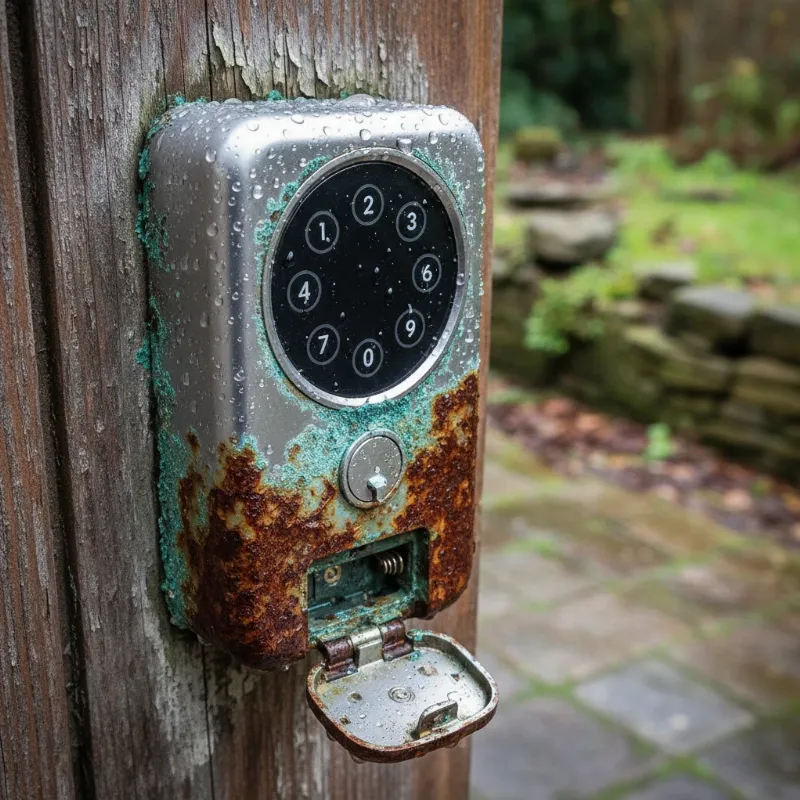 Outdoor smart lock showing signs of rust and corrosion on its metal and electronic parts.
Identifying the Signs: Early Detection of Rust and Corrosion
Early detection is key to mitigating damage and simplifying the restoration process for your smart locks. Vigilant inspection can help you catch issues before they escalate.
Visual Cues
- Discoloration: The most obvious sign is the appearance of reddish-brown (rust) or greenish-blue (corrosion on brass/copper components) discoloration on the metallic surfaces. This can manifest as small spots, streaks, or a widespread film.
- Tea Staining: On stainless steel smart locks, a common phenomenon called “tea staining” might appear. This is a brown discoloration that, while generally not affecting the structural integrity, can mar the lock’s aesthetic appeal and indicate surface oxidation.
- Flaking or Pitting: More advanced corrosion may cause the metal surface to flake, pit, or become uneven to the touch. This suggests a deeper degradation of the material.
|
Our Picks for the Best smart locks in 2026
As an Amazon Associate I earn from qualifying purchases.
|
||
| Num | Product | Action |
|---|---|---|
| 1 | Tapo Smart Wi-Fi Deadbolt Door Lock – Keyless Tactile Buttons, Customized Access with in-App Monitoring, Auto-Lock, IP54 Weatherproof, BHMA Grade 3, Compatible with Standard Door Sizes, Tapo DL100 |

|
| 2 | Wyze Auto-Lock Bolt v2, Fingerprint Keyless Entry Smart Lock, AI Learning Scanner with Wi-Fi Front Door Lock Deadbolt, Auto-Lock, 8 Months Battery, BHMA2, IP53, Anti-Peep Keypad, Backup Keys |
|
| 3 | Schlage Encode Smart WiFi Deadbolt Lock for Front Door - Keyless Entry with App or Touchscreen - Works with Alexa, Hey Google, & Airbnb - Create Codes for Guests - Matte Black |
|
| 4 | Schlage Encode Smart WiFi Deadbolt Lock for Front Door - Keyless Entry with App or Touchscreen - Works with Alexa, Hey Google, & Airbnb - Create Codes for Guests - Satin Nickel Silver |
|
| 5 | Yale Security Assure Lock 2 Deadbolt, Black Suede Keyed Smart Entry Door Lock with Wi-Fi Connected Keypad for Code Entry and Remote Access, YRD410-WF1-BSP |
|
| 6 | TEEHO TE001 Keyless Entry Door Lock with Keypad - Smart Deadbolt Lock for Front Door with 2 Keys - Auto Lock - Easy Installation - Matte Black |
|
| 7 | Wyze Palm Lock, Smart Door Lock with Palm Vein Recognition, Keyless Entry Smart Locks for Front Door, Keypad, Auto Lock, Dual Battery, Wi-Fi, Works with Alexa & Google, BHMA, IP53, Mechanical Key |
|
| 8 | Smart Door Handle Lock with Keypad: Yamiry Fingerprint Smart Knob - Keyless Entry Digital Lock for Front Door - Deadbolt with APP - Generate Passcode Remotely - DIY Installation |
|
| 9 | ULTRALOQ U-Bolt Pro WiFi Smart Lock with Door Sensor, 8-in-1 Keyless Entry Door Lock with Fingerprint ID, App Remote Control, Built-in WiFi Keypad Deadbolt, Auto Unlock, IP65 Waterproof, Easy Install |
|
| 10 | Smart Door Lock with Camera Fingerprint Keyless Entry Door Lock Electronic Deadbolt with Keypad Code, App Remote Control, Auto Unlock for Front Door |
|
Functional Issues
Beyond aesthetics, rust and corrosion can manifest through operational problems:
- Sticking or Difficulty in Operation: If your smart lock’s mechanical parts (e.g., the deadbolt or latch) feel stiff, rough, or are hard to turn manually, internal corrosion might be impeding their smooth movement.
- Slow or Unresponsive Keypads/Fingerprint Sensors: While often battery-related, corrosion on internal contacts can also lead to sluggish performance of electronic interfaces, including keypads and fingerprint readers.
- Erratic Behavior: Unexpected unlocking, failure to respond to commands, or inconsistent functionality could be symptoms of short circuits or degraded electrical connections caused by moisture and corrosion within the lock’s electronic core.
- Battery Degradation: Rust on battery terminals can reduce power efficiency and shorten battery life, leading to more frequent replacements and potential power issues for your smart lock.
Recognizing these signs early allows for prompt intervention, potentially saving your smart lock from irreversible damage and expensive replacement.
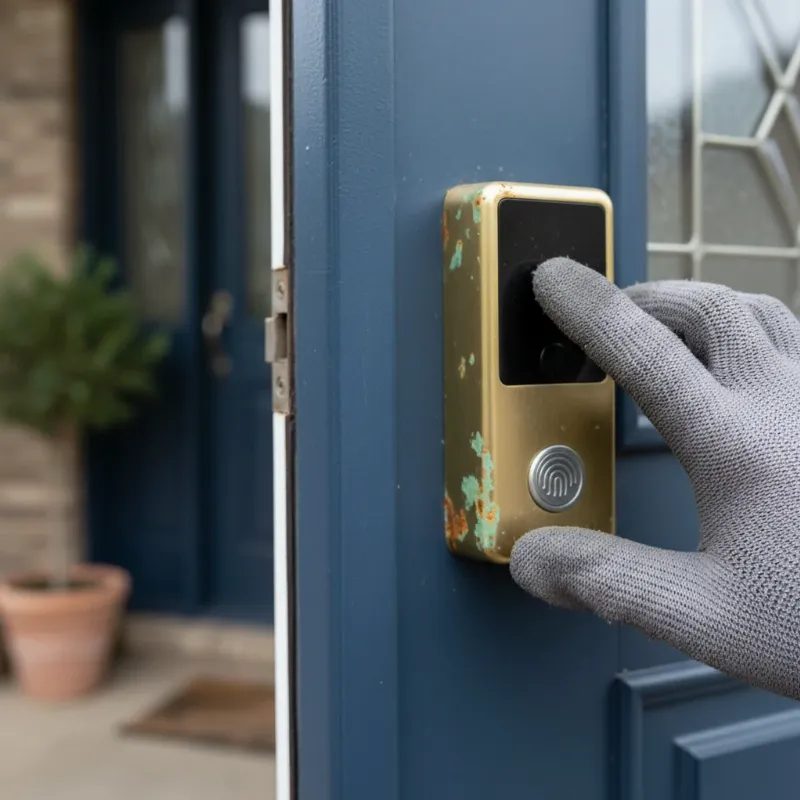 Homeowner inspecting an outdoor smart lock for signs of rust, discoloration, or functional issues.
Restoring Brilliance: Effective Methods for Removing Rust and Corrosion
Once rust or corrosion is detected, prompt action is crucial. The approach to removal depends on the severity and location of the corrosion. Always exercise caution, especially when dealing with the electronic components of a smart lock.
Gentle DIY Solutions for Surface Rust
For minor surface rust or discoloration, several household remedies can be effective.
- White Vinegar: This mild acid can dissolve rust. You can spray a 50/50 mixture of white vinegar and water directly onto the affected areas of the smart lock’s exterior. Let it sit for a few minutes, then gently wipe clean with a damp cloth. For tougher spots, you might let it soak for a few hours before scrubbing with a non-abrasive brush.
- Baking Soda Paste: Mix baking soda with a small amount of water to create a thick paste. Apply the paste over the rusted areas and let it sit for a couple of hours. The mild abrasive nature of baking soda, combined with its alkalinity, helps to lift the rust. Gently scrub with a soft-bristled brush (like an old toothbrush) and wipe clean.
- Lemon Juice and Salt: Sprinkle salt over the rusted area, then squeeze lemon or lime juice over the salt. The citric acid and salt create a mild abrasive cleaner. Allow the mixture to sit for a few hours before scrubbing gently and rinsing thoroughly. Remember to dry the smart lock immediately afterward to prevent new rust.
When applying these solutions, take care to prevent liquids from seeping into internal electronic components. If possible, consider temporarily removing the lock’s exterior housing for easier and safer cleaning.
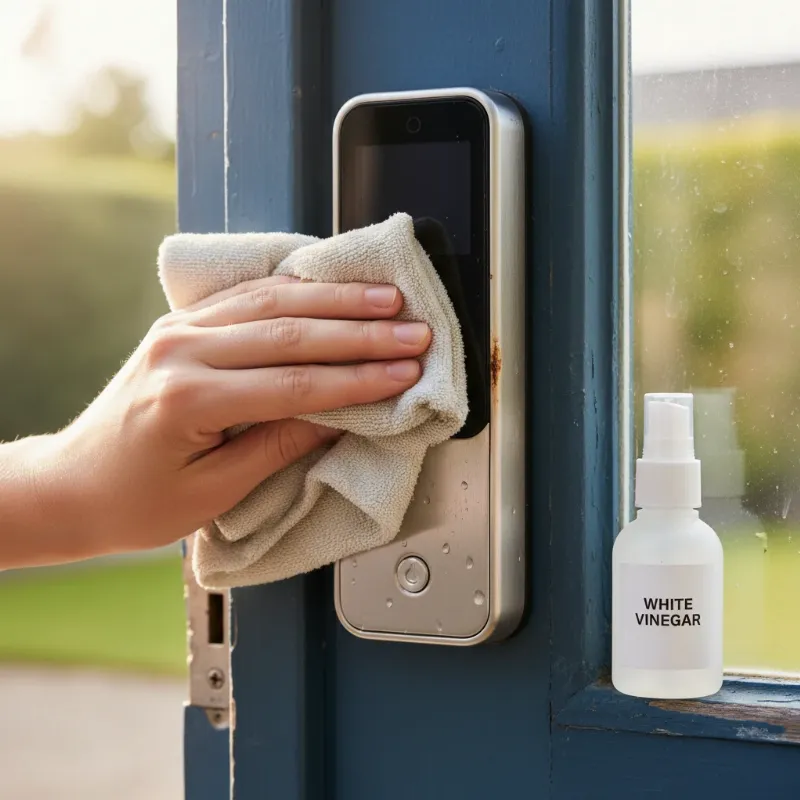 Hand cleaning rust from an outdoor smart lock with white vinegar and a soft cloth.
Mechanical & Chemical Approaches for More Stubborn Rust
For more persistent rust, a slightly more aggressive approach might be necessary, but always with extreme caution for smart locks.
- Mild Abrasives (Use with extreme caution): For external metal parts that are severely rusted, a very fine grade steel wool soap pad (like a 125-grit) can be used to gently scrub away rust. This method is generally for robust metal hardware and should be used sparingly on smart locks, avoiding contact with plastic, screens, or electronic components. Never use harsh abrasive tools that could scratch or damage the finish.
- Commercial Rust Removers: There are various chemical rust removal solutions available. If you opt for these, choose products specifically designed for delicate metals or electronics if possible. Always read the manufacturer’s instructions carefully and test on an inconspicuous area first. Ensure adequate ventilation and wear protective gear. These are typically best for external, purely mechanical parts, not the electronic heart of a smart lock.
- Specialized Stainless Steel Cleaners: For “tea staining” or discoloration on stainless steel smart locks, commercial stainless steel cleaners (e.g., 3M Stainless Steel Cleaner or Goddard’s) along with a non-scratch cleaning sponge or cloth can effectively restore the finish without damaging the material.
Addressing Internal Components
Internal corrosion, particularly within the electronic housing or battery compartment, requires a delicate touch:
- Battery Compartment Cleaning: If you find corrosion on battery contacts, remove the batteries immediately. Use a cotton swab lightly dampened with white vinegar or lemon juice to gently clean the corroded terminals. Allow them to dry completely before inserting new, high-quality batteries. This prevents further damage to the circuit board from battery leakage.
- Lubricants for Mechanical Parts: For stiff mechanical components within the lock cylinder or bolt, dry lubricants like graphite powder can be effective. A small puff into the keyway or moving parts can improve functionality. Water-displacement sprays like WD-40 can sometimes help loosen rusted mechanical parts but should be used sparingly and never sprayed directly into electronic components.
- Professional Assistance: If the rust or corrosion is extensive, or if it affects critical internal electronic components, it is highly recommended to consult a professional locksmith or the smart lock manufacturer. Attempting to dismantle and repair complex electronics without expertise can lead to irreversible damage.
Fortifying Your Security: Preventing Future Rust and Corrosion
The best defense against rust and corrosion is a proactive prevention strategy. By implementing a regular maintenance routine and making smart installation choices, you can significantly extend the life of your outdoor smart locks.
Strategic Placement & Protection
- Install Under Shelter: Whenever possible, install outdoor smart locks under a porch overhang, awning, or other protective structure. Minimizing direct exposure to rain, snow, and harsh sunlight greatly reduces moisture accumulation.
- Use Silicone Sealants and Gaskets: Ensure that your smart lock is properly sealed where it meets the door. High-quality smart locks designed for outdoor use often come with gaskets. You can also apply a bead of silicone sealant around the edges of the lock’s exterior housing to create a water-resistant barrier.
- Consider Protective Covers or Shields: For locks in extremely exposed areas or coastal regions, external covers or shields can provide an additional layer of protection against direct weather impact and salt spray.
Material Matters
- Choose Rust-Resistant Materials: When purchasing a smart lock, prioritize models made from high-quality, corrosion-resistant materials such as marine-grade stainless steel (e.g., 316-grade) or solid brass. While these might be a higher initial investment, their durability in harsh environments will save you maintenance headaches and replacement costs in the long run.
- Weather-Rated Locks: Always check the IP (Ingress Protection) rating of an outdoor smart lock. A higher IP rating (e.g., IP65 or IP66) indicates better resistance to dust and water ingress.
Regular Maintenance Routine
- Frequent Cleaning: A simple, regular cleaning routine is one of the most effective preventative measures. Use a soft, damp cloth and a mild soap solution to wipe down the exterior surfaces of your smart lock every few weeks. Avoid harsh chemicals or abrasive cleaners that can strip protective coatings.
- Pressurized Air: Once a month, use a can of compressed air to blast dust, dirt, and debris from the keyhole (if applicable), keypad crevices, and around sensors. This prevents buildup that can trap moisture and accelerate corrosion.
- Apply Protective Coatings: Regularly apply a thin layer of protective coating, such as a silicone-based spray or graphite powder, to the lock’s mechanical components. These create a barrier against moisture and lubricate moving parts. Focus on areas like the bolt, latch, and keyway. For external surfaces, some waxes or automotive sealants can offer a protective layer, but ensure they are safe for your lock’s finish and electronics.
- Seasonal Care: Adjust your maintenance schedule based on the seasons. Increase cleaning and protection efforts before and during periods of high humidity, heavy rainfall, or freezing temperatures.
Beyond the Surface: Protecting Smart Lock Electronics
The electronic heart of your smart lock requires specific attention to prevent corrosion.
- Inspect Seals Regularly: Ensure all seals and gaskets are intact and properly seated. If you notice any fluid leaks around the lock, address them immediately.
- Battery Vigilance: Always use high-quality, non-rechargeable alkaline batteries from reputable brands. Batteries can leak over time, causing corrosive damage to the circuit board. Check the battery compartment every 6-12 months for any signs of leakage or corrosion on the terminals. Replace batteries proactively before they fully deplete to minimize the risk of leakage.
- Avoid Corrosive Substances: Never let the smart lock’s surface or internal components come into contact with corrosive chemicals, solvents, or harsh cleaning agents, as these can damage protective layers and accelerate oxidation.
Expert Insights for Long-Term Durability
Preventing and addressing rust and corrosion is not just about aesthetics; it’s about safeguarding your home’s entry points. As a seasoned technician, I’ve seen firsthand how neglect can lead to compromised security and functionality.
“A smart lock is an investment in both convenience and security. Treating it with regular, diligent care against environmental factors like rust and corrosion is not merely maintenance; it’s essential asset protection.”
This commitment to proactive care ensures that your smart lock system remains a reliable guardian for your property.
Conclusion
Outdoor smart locks offer unparalleled security and convenience, but their exposure to the elements makes them vulnerable to rust and corrosion. By understanding the causes, recognizing the early signs, and diligently applying both preventative measures and appropriate removal techniques, you can significantly extend the lifespan and maintain the pristine condition of your smart security devices. Regular cleaning, strategic installation, and choosing durable materials are your best allies in this ongoing battle. Embrace these practices, and your smart locks will continue to provide seamless access and robust protection for your home, standing strong against nature’s persistent challenges.
Ready to fortify your home security? Explore our range of weather-resistant smart locks and essential maintenance tools designed for ultimate durability and performance.
Frequently Asked Questions
Are smart locks more prone to rust than traditional locks?
Not necessarily, but the impact of rust on smart locks can be more severe. While both traditional and smart locks made of metal can rust, smart locks contain sensitive electronic components that are far more vulnerable to moisture and corrosion. Rust on internal electronics or battery contacts can lead to complete device failure, whereas a traditional lock might merely become stiff or difficult to operate. Proper material selection and weatherproofing are crucial for outdoor smart locks.
Can WD-40 be used on smart locks?
WD-40 can sometimes be used sparingly on external, purely mechanical parts of a smart lock, such as the bolt mechanism, to help loosen minor rust or lubricate stiff components. However, it is a water-displacement spray and not a long-term lubricant, and it should never be sprayed directly into the electronic housing, keypads, or internal circuitry. Its oily nature can attract dust and grime, and it can potentially damage plastic components or electronic contacts. For internal lubrication, a dry lubricant like graphite powder is generally safer.
How often should I clean my outdoor smart lock?
The frequency of cleaning depends on your local environment. For most areas, a thorough cleaning of the exterior surfaces every 2-4 weeks is recommended. In coastal regions, areas with high humidity, or during periods of heavy precipitation, increasing the frequency to weekly or bi-weekly cleaning is advisable. Additionally, check the battery compartment for corrosion every 6-12 months, and apply protective coatings or lubricants to mechanical parts seasonally, especially before harsh weather.