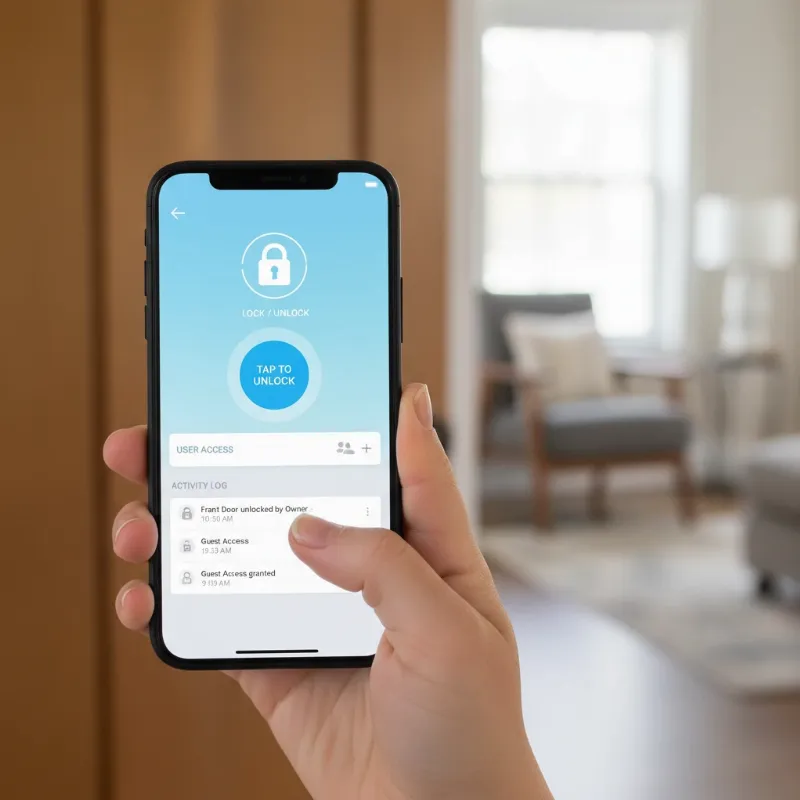
Maintaining the smooth operation of your smart lock is paramount for both security and convenience. A well-functioning smart lock provides seamless access, responds efficiently to commands, and integrates effortlessly into your smart home ecosystem. However, like any mechanical device, the internal mechanism of a smart lock requires periodic care, particularly lubrication, to prevent wear and tear, reduce friction, and ensure long-term reliability. Neglecting this simple maintenance task can lead to frustrating delays, decreased battery life, and even premature failure of your sophisticated lock. This comprehensive guide will equip you with the knowledge and steps needed to properly lubricate your smart lock, ensuring it continues to provide the safety and convenience you rely on.
Understanding Your Smart Lock’s Mechanism
At its core, a smart lock combines advanced electronics with a traditional mechanical locking mechanism. While the “smart” components handle authentication, connectivity, and digital controls, the actual locking and unlocking action still depends on physical parts: the deadbolt, latch, cylinder, and various gears and springs within the housing. These mechanical elements are constantly moving and rubbing against each other during operation. Over time, friction, dust, and environmental factors can cause these parts to become stiff, sticky, or sluggish, hindering the lock’s performance and putting strain on its internal motors and battery. Regular lubrication specifically targets these mechanical components, ensuring they glide smoothly and extend the life of your entire smart lock system.
Why Lubrication Matters for Smart Locks
Proper lubrication is not merely an optional chore; it is a critical aspect of smart lock maintenance that directly impacts its efficiency, longevity, and security. Neglecting this simple step can lead to a cascade of problems, compromising the very benefits a smart lock is designed to deliver.
Enhanced Performance
|
Our Picks for the Best smart locks in 2026
As an Amazon Associate I earn from qualifying purchases.
|
||
| Num | Product | Action |
|---|---|---|
| 1 | Tapo Smart Wi-Fi Deadbolt Door Lock – Keyless Tactile Buttons, Customized Access with in-App Monitoring, Auto-Lock, IP54 Weatherproof, BHMA Grade 3, Compatible with Standard Door Sizes, Tapo DL100 |

|
| 2 | Wyze Auto-Lock Bolt v2, Fingerprint Keyless Entry Smart Lock, AI Learning Scanner with Wi-Fi Front Door Lock Deadbolt, Auto-Lock, 8 Months Battery, BHMA2, IP53, Anti-Peep Keypad, Backup Keys |
|
| 3 | TEEHO TE001 Keyless Entry Door Lock with Keypad - Smart Deadbolt Lock for Front Door with 2 Keys - Auto Lock - Easy Installation - Matte Black |
|
| 4 | Yale Security Assure Lock 2 Deadbolt, Black Suede Keyed Smart Entry Door Lock with Wi-Fi Connected Keypad for Code Entry and Remote Access, YRD410-WF1-BSP |
|
| 5 | Smart Door Handle Lock with Keypad: Yamiry Fingerprint Smart Knob - Keyless Entry Digital Lock for Front Door - Deadbolt with APP - Generate Passcode Remotely - DIY Installation |
|
| 6 | Schlage Encode Smart WiFi Deadbolt Lock for Front Door - Keyless Entry with App or Touchscreen - Works with Alexa, Hey Google, & Airbnb - Create Codes for Guests - Satin Nickel Silver |
|
| 7 | Schlage Encode Smart WiFi Deadbolt Lock for Front Door - Keyless Entry with App or Touchscreen - Works with Alexa, Hey Google, & Airbnb - Create Codes for Guests - Matte Black |
|
| 8 | ULTRALOQ U-Bolt Pro WiFi Smart Lock with Door Sensor, 8-in-1 Keyless Entry Door Lock with Fingerprint ID, App Remote Control, Built-in WiFi Keypad Deadbolt, Auto Unlock, IP65 Waterproof, Easy Install |
|
| 9 | Wyze Palm Lock, Smart Door Lock with Palm Vein Recognition, Keyless Entry Smart Locks for Front Door, Keypad, Auto Lock, Dual Battery, Wi-Fi, Works with Alexa & Google, BHMA, IP53, Mechanical Key |
|
| 10 | Smart Door Lock with Camera Fingerprint Keyless Entry Door Lock Electronic Deadbolt with Keypad Code, App Remote Control, Auto Unlock for Front Door |
|
A lubricated smart lock operates with effortless precision. The deadbolt extends and retracts smoothly, the latch engages silently, and the entire mechanism responds instantly to your commands, whether via fingerprint, keypad, or smartphone. This fluid operation eliminates frustrating delays and reduces the wear on internal motors, ensuring your lock performs optimally every single time you use it.
Extended Lifespan
Friction is the enemy of moving parts. Without lubrication, metal components grind against each other, leading to accelerated wear, corrosion, and the accumulation of microscopic debris. By applying the correct lubricant, you create a protective barrier that minimizes friction, preserves the integrity of the mechanical parts, and significantly extends the overall operational lifespan of your smart lock. This simple act can save you the cost and hassle of premature replacement.
Improved Security
A sticky or sluggish lock is a vulnerable one. It might fail to fully engage, leaving your property less secure, or it could jam, preventing you from locking your door altogether. Regular lubrication ensures that all locking components move freely and securely, allowing the deadbolt to throw completely and the latch to catch firmly. A well-maintained lock is a reliable lock, offering consistent protection for your home or business.
Preventing Damage
When a lock mechanism becomes stiff, the natural inclination is to apply more force, either manually or through the lock’s internal motor. This increased strain can damage delicate components, strip gears, or break springs, leading to costly repairs or complete lock failure. Lubrication prevents this by ensuring effortless movement, eliminating the need for excessive force and safeguarding the intricate engineering of your smart lock.
The Right Lubricants for Smart Locks: What to Use and What to Avoid
Choosing the correct lubricant is the most critical step in smart lock maintenance. Using the wrong product can do more harm than good, attracting dirt, gunking up the mechanism, or even damaging sensitive electronic components. Always opt for lubricants specifically designed for locks or fine mechanisms.
Recommended Lubricants
- Powdered Graphite: This is arguably the most recommended lubricant for lock cylinders and internal mechanisms. Graphite is a dry lubricant, meaning it doesn’t attract dust or grime, which is crucial for the intricate pins and springs inside a lock. It provides excellent long-lasting slipperiness without causing buildup.
- PTFE (Teflon-based) Lubricants: These come in aerosol sprays that apply a dry, non-oily film. PTFE lubricants are excellent for internal moving parts, linkages, and even keyways, as they also resist dust and dirt accumulation. They are generally safe for plastics and rubbers often found in smart lock components.
- Silicone-based Sprays: Non-stick silicone lubricants can be suitable for certain external parts of the lock or for components where metal-on-metal friction is not the primary concern. However, caution should be exercised when applying them directly into key cylinders, as some formulations can still attract dust over time. Always check the product label for lock-specific recommendations.
Lubricants to Avoid (and why)
- Petroleum-based Lubricants (e.g., WD-40 as a lubricant, household oils, motor oil): These are the absolute worst choice for smart locks, or any lock for that matter. While WD-40 can act as a cleaner or penetrating oil, it is not a long-term lubricant for locks. Petroleum-based products attract and trap dust, dirt, and debris, which will quickly gum up the delicate internal mechanism, creating a sticky mess that is far worse than the original problem. They can also degrade plastic and rubber components found in modern smart locks.
- Grease/Thick Oils: Similar to petroleum-based lubricants, heavy greases and oils are too viscous for lock mechanisms. They will quickly become a magnet for contaminants, leading to sluggish operation and eventual seizing of parts.
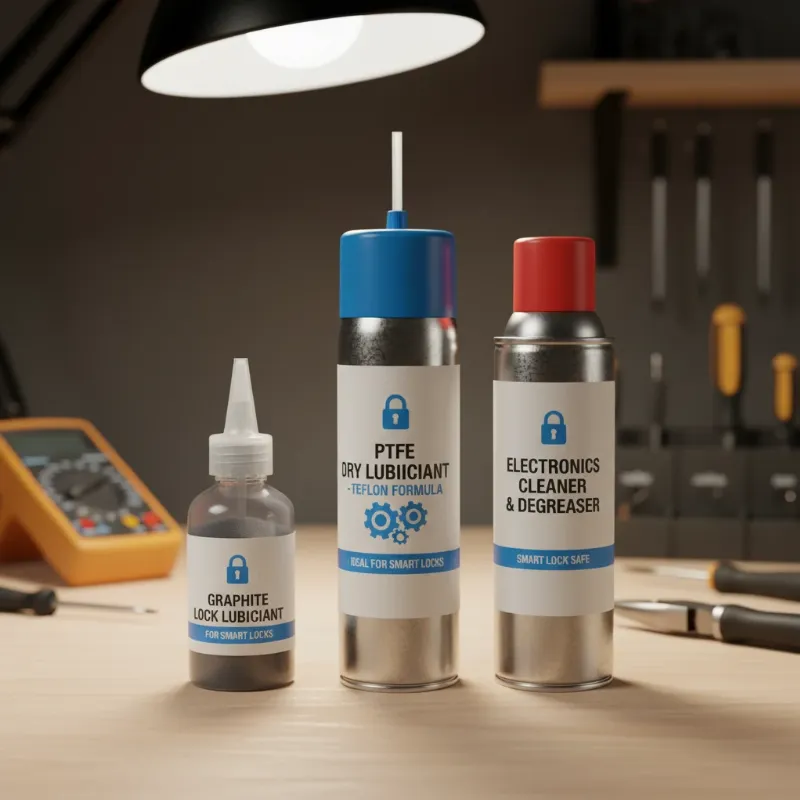 A selection of appropriate lubricants for smart locks, including powdered graphite, PTFE spray, and a can of electronics cleaner.
Step-by-Step Guide: How to Lubricate Your Smart Lock
Proper lubrication is a straightforward process, but it requires attention to detail and the right technique to be effective without causing harm. Follow these steps to ensure your smart lock mechanism receives the care it needs.
-
Gather Your Tools: Before you begin, assemble everything you’ll need. This typically includes your chosen dry lubricant (powdered graphite or PTFE spray), a clean, lint-free cloth, and optionally, compressed air or a non-residue electronic contact cleaner for preliminary cleaning. Having everything at hand ensures a smooth, uninterrupted process.
-
Clean the Mechanism (Optional but Recommended): While not always strictly necessary, a preliminary cleaning can significantly improve lubrication effectiveness, especially if your lock is particularly sticky or has accumulated visible grime. If your smart lock has a traditional keyhole, you can use a small amount of compressed air to blow out any loose debris. For more stubborn buildup, a specialized electronic contact cleaner (ensure it’s plastic-safe and leaves no residue) can be lightly sprayed into the keyhole and latch area. Crucially, allow any wet cleaner to completely evaporate and dry before proceeding to lubrication.
-
Apply the Lubricant: This step varies slightly depending on the type of lubricant you’re using.
- For Powdered Graphite: Gently puff the graphite powder into the keyhole (if applicable), along the deadbolt, and into any visible moving parts of the latch mechanism. Many graphite lubricants come with a nozzle or a small puff applicator designed for this purpose. A little goes a long way; avoid over-applying.
- For PTFE (Teflon-based) Spray: Most PTFE sprays come with a small straw attachment. Insert the straw into the keyhole, along the deadbolt, and into the gaps where the latch mechanism operates. Deliver a couple of short, controlled bursts. The solvent will evaporate, leaving behind a dry film of lubricant.
-
Work the Lubricant In: Once the lubricant has been applied, it’s essential to distribute it evenly throughout the mechanism. If your smart lock has a keyhole, insert your key and turn it several times, cycling the lock from locked to unlocked positions. If it’s a keyless mechanism, simply operate the deadbolt and latch manually (or via the keypad/app if possible) through their full range of motion multiple times. This action helps the lubricant penetrate all the intricate moving parts, ensuring comprehensive coverage and immediate improvement in smoothness.
-
Wipe Away Excess: After working the lubricant in, use your clean, lint-free cloth to wipe away any visible excess lubricant from the exterior of the lock. This is particularly important for sprays, as any residue left on the surface can still attract dust and dirt over time, counteracting the benefits of the dry lubricant inside. A clean exterior also maintains the aesthetic appeal of your smart lock.
“Smart lock maintenance is a blend of precision and prevention. Choosing the right lubricant and applying it correctly is the cornerstone of ensuring your device remains a seamless guardian, not a frustrating hurdle.” – Sarah Chen, Smart Home Technology Expert
How Often Should You Lubricate Your Smart Lock?
The frequency of smart lock lubrication isn’t a one-size-fits-all answer, as it depends on several factors, including usage, environmental conditions, and the type of lock. However, there are general guidelines to follow to keep your lock in optimal condition.
As a general rule, consider lubricating your smart lock annually as part of your routine home maintenance. This proactive approach helps prevent issues before they arise. However, if your lock experiences heavy daily use, is exposed to harsh weather conditions (such as extreme humidity, dust, or coastal air), or if you begin to notice any signs of stiffness, grinding, or sluggishness in its operation, it’s advisable to lubricate it more frequently. The goal is to address minor friction issues before they escalate into significant problems that could impact the lock’s performance or battery life.
Troubleshooting Common Issues and Expert Tips
Even with regular lubrication, you might encounter issues, or wonder about other maintenance aspects. Here are some common concerns and expert advice to keep your smart lock performing its best.
What if the lock is still sticky after lubrication?
If your lock remains stiff or difficult to operate even after proper lubrication, it might indicate a more significant underlying issue. First, ensure you used the correct type of dry lubricant and that there’s no sticky residue from previous incorrect lubricants. If the problem persists, it could be due to a misaligned door strike plate, loose mounting screws, or internal damage to the mechanism that lubrication alone cannot fix. In such cases, further investigation or professional assistance may be required.
Maintenance beyond lubrication:
Lubrication is one piece of the puzzle. Remember to regularly check and replace your smart lock’s batteries, as low power can sometimes mimic a mechanical issue. Clean external keypads and fingerprint readers with a soft, dry cloth to ensure optimal sensor performance. For Wi-Fi or Bluetooth models, periodically check for firmware updates, as these often include performance enhancements and bug fixes that contribute to overall reliability.
When to call a professional:
While routine lubrication is a DIY task, don’t hesitate to call a certified locksmith or smart lock technician if you encounter persistent mechanical problems, electronic malfunctions, or if you’re unsure about disassembling any part of your lock. Attempting complex repairs without proper knowledge can void warranties or cause further damage to your sophisticated device. Professionals have the tools and expertise to diagnose and resolve intricate issues safely.
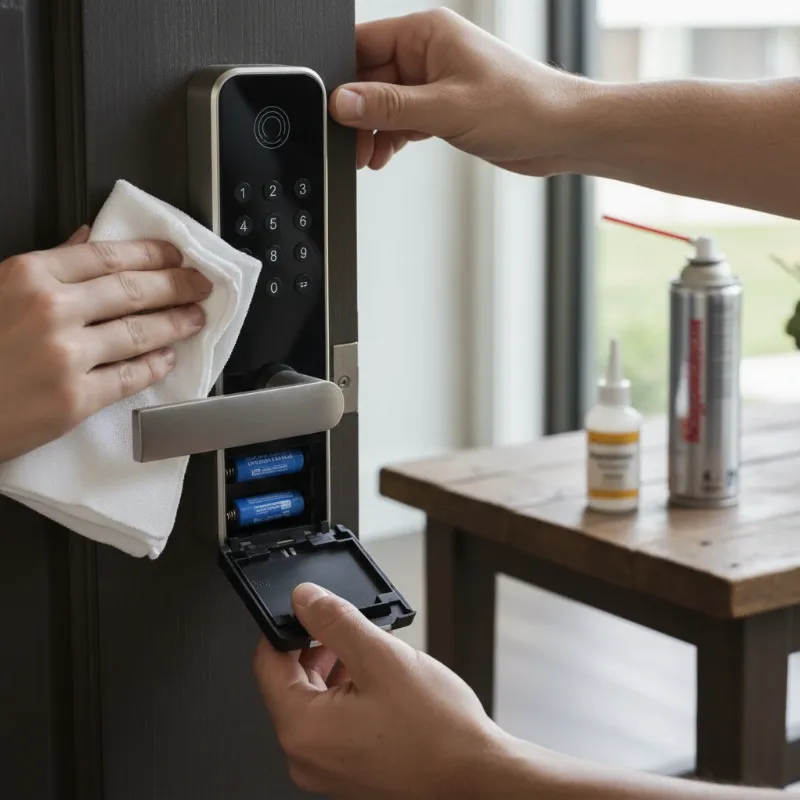 A person performing routine maintenance on a smart lock, including battery check, cleaning, and light lubrication, highlighting overall care.
Comparison Table: Lubricant Types
| Feature | Powdered Graphite | PTFE (Teflon-based) Spray | Petroleum-based Oils (e.g., WD-40, motor oil) |
|---|---|---|---|
| Type | Dry | Dry film | Wet, oily |
| Dust Attraction | Very low | Low | High |
| Residue | Minimal, fine powder | Minimal, dry film | Gummy, sticky, attracts dirt |
| Best For | Key cylinders, internal mechanisms | Internal mechanisms, moving parts, linkages | Strongly avoid for locks |
| Compatibility | Most materials, safe for electronics | Most materials, generally safe for plastics/rubbers | Can degrade plastics/rubbers, attracts grime |
The Future of Smart Lock Maintenance
The evolution of smart locks continues at a rapid pace, and with it, the approaches to maintenance are also advancing. We can anticipate future smart locks incorporating even more robust, self-lubricating materials in their mechanical components, potentially reducing the need for manual lubrication. Integrated diagnostic features, powered by advanced AI, may soon notify users proactively when a specific component requires attention, or even when lubricant levels are low. Furthermore, seamless connectivity with smart home hubs could allow for predictive maintenance schedules based on usage patterns and environmental data. While traditional care remains vital today, tomorrow’s smart locks promise even greater convenience and autonomy in their upkeep, ensuring enhanced longevity and reliability through intelligent design and integrated diagnostics.
Conclusion
The proper lubrication of your smart lock mechanism is a small investment of time that yields significant returns in performance, security, and longevity. By understanding the critical role of lubrication, choosing the right dry lubricants, and following a simple step-by-step process, you can ensure your smart lock operates smoothly, quietly, and reliably for years to come. This proactive maintenance not only prevents frustrating issues like sticky bolts and sluggish operation but also safeguards your investment and reinforces the security of your home. Prioritizing this essential task will keep your smart lock working effortlessly, providing the convenience and peace of mind you expect from cutting-edge home technology. Isn’t it time to give your smart lock the smooth operation it deserves?
Frequently Asked Questions
Is WD-40 good for lubricating smart locks?
No, WD-40 is not recommended as a lubricant for smart locks. While it can act as a penetrating oil or cleaner, it is petroleum-based and attracts dust and grime, which will gum up the delicate internal lock mechanism over time and can cause more problems than it solves.
How often should I lubricate my smart lock?
It is generally recommended to lubricate your smart lock annually as part of routine maintenance. However, if your lock sees heavy use, is exposed to harsh weather conditions, or starts to feel sticky or sluggish, more frequent lubrication may be necessary to maintain optimal performance.
Can I use household oil to lubricate my smart lock?
You should absolutely avoid using household oils (like cooking oil or general-purpose machine oil) to lubricate your smart lock. These oils are wet, will attract and trap dirt, and can congeal into a sticky residue that will seize up the lock’s internal components, potentially causing irreversible damage.
What are the signs my smart lock needs lubrication?
Common signs that your smart lock needs lubrication include the deadbolt feeling stiff or difficult to extend/retract, a grinding noise during operation, the latch sticking when closing the door, or a generally sluggish response from the mechanical parts. Addressing these early can prevent more significant issues.