As the desire to maintain independence and comfort at home grows, more and more seniors are choosing to “age in place.” This preference allows older adults to remain in their familiar surroundings, fostering emotional security and routine. Smart locks are emerging as a pivotal technology, offering a blend of enhanced security, unparalleled convenience, and peace of mind for both seniors and their families, making independent living not just possible, but safer and simpler. By addressing common challenges associated with aging, from forgotten keys to the need for caregiver access, smart locks provide innovative solutions that support a dignified and self-reliant lifestyle.
What Are Smart Locks?
Smart locks are technologically advanced door locking mechanisms that offer keyless entry and can be controlled remotely. Unlike traditional locks that rely solely on physical keys, smart locks integrate with smart home systems, allowing for various methods of access and enhanced security features. These devices represent a significant evolution in home security, moving beyond basic mechanical functions to offer digital control and monitoring capabilities.
The landscape of smart locks is diverse, encompassing several popular types. Bluetooth-enabled locks allow control via a smartphone app when in close proximity, while Wi-Fi locks offer global remote access. Fingerprint recognition locks provide biometric authentication for quick, secure entry, eliminating the need for keys or codes. Keypad locks use numerical passcodes, often with anti-peep features, and some advanced models include card readers (RFID/NFC) or even facial recognition for hands-free access. The development of smart locks has progressed from rudimentary electronic keypads to sophisticated, interconnected systems that can be part of a larger smart home ecosystem.
Superior Advantages of Smart Locks
Smart locks offer a host of benefits that significantly enhance the quality of life for seniors aging in place, addressing both convenience and critical safety concerns.
One of the most immediate advantages is convenience and ease of use. Seniors can say goodbye to fumbling with keys or the worry of losing them. Keyless entry options, such as fingerprint recognition or personalized passcodes, simplify daily routines. Imagine opening the door with just a touch of a finger or a voice command, especially when hands are full. Furthermore, smart locks allow family members or caregivers to manage access remotely, granting entry for services or in emergencies without needing a physical key exchange. Auto-locking features ensure that the door is always secured, alleviating concerns about forgetting to lock up.
Enhanced security is another cornerstone benefit. Smart locks provide real-time monitoring and activity logs, allowing authorized individuals to see who enters and exits the home and at what time. This transparency offers peace of mind and can be crucial for monitoring a senior’s well-being. Many smart locks feature advanced encryption, tamper alerts, and multi-factor authentication to protect against unauthorized access. Temporary access codes can be issued to visitors or service providers, which can then be revoked, preventing long-term security vulnerabilities associated with shared physical keys.
Beyond security, smart locks offer intelligent features that integrate seamlessly with other smart home devices. Voice control through virtual assistants like Alexa or Google Assistant allows for hands-free operation, a significant advantage for those with mobility challenges. They can be programmed to work with smart lighting or thermostats, creating a more responsive and comfortable living environment. The modern and often sleek design of smart locks also contributes to a contemporary home aesthetic, moving away from bulky, traditional hardware.
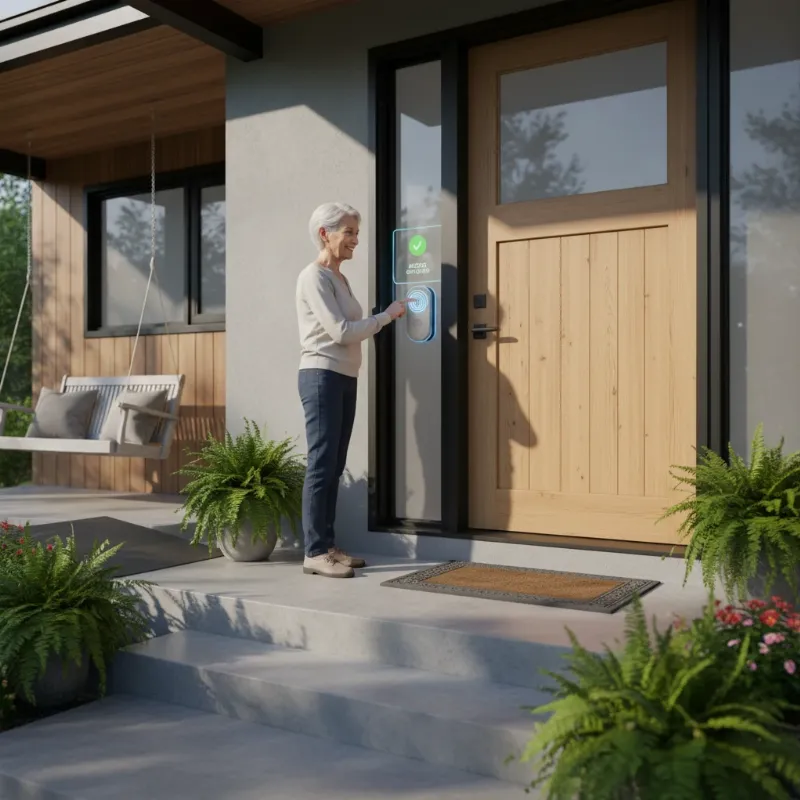 Elderly woman easily unlocking her smart lock with a fingerprint scanner, illustrating convenience and accessibility for seniors
Popular Types of Smart Locks on the Market
The market offers a variety of smart lock types, each with unique features catering to different needs and preferences, especially for seniors.
- Fingerprint Locks: These locks utilize biometric technology, recognizing a senior’s unique fingerprint for entry.
- Advantages: Extremely convenient, no keys or codes to remember, quick access (often under 0.3 seconds), highly secure as fingerprints are unique, ideal for those with limited dexterity or memory concerns.
- Disadvantages: Can be affected by very dry or wet fingers, may require initial setup of multiple fingerprints, generally higher cost.
- Notable Brands: Lockly, Ultraloq, Desloc.
- Card-Based Locks: Using RFID or NFC cards/fobs for entry, common in commercial settings but also available for residential use.
- Advantages: Easy to use by simply tapping a card, good for guests or caregivers with temporary access, can be reprogrammed easily.
- Disadvantages: Cards can be lost or stolen, seniors need to carry the card, less common for primary residential use.
- Applications: Often found in assisted living facilities or homes with frequent caregivers.
- Keypad Locks (Passcode Entry): These locks feature a numerical keypad where users enter a pre-set code.
- Advantages: No physical keys needed, easy to share codes with trusted individuals, many offer “anti-peep” functions to prevent code guessing.
- Disadvantages: Codes can be forgotten or shared improperly, less convenient if dexterity issues make pressing small buttons difficult.
- Security: Many offer scrambling codes to prevent pattern detection.
- Facial Recognition Locks: Utilizing cameras to scan and verify a user’s face.
- Advantages: Completely hands-free and contactless, very high security, ideal for seniors with severe mobility limitations.
- Disadvantages: Highest cost, potential for issues with lighting or facial changes (e.g., new glasses), privacy concerns for some users.
- Technology: Advanced solutions like Lockly Visage are leading this category.
- Smartphone-Controlled Locks (Bluetooth/Wi-Fi): Managed via a dedicated app on a smartphone.
- Advantages: Remote locking/unlocking (Wi-Fi), activity logs, customizable alerts, easy management of multiple users, can integrate with voice assistants.
- Disadvantages: Requires a smartphone and familiarity with apps, reliance on battery life for both phone and lock, Wi-Fi versions may require a hub.
- Integration: Often compatible with Apple HomeKit, Google Home, Amazon Alexa.
Comparing Smart Lock Types for Senior Living
Choosing the right smart lock involves weighing various features against individual needs. Here’s a comparison to help guide your decision:
| Feature | Fingerprint Lock | Card-Based Lock | Keypad Lock | Facial Recognition Lock | Smartphone-Controlled Lock |
|---|---|---|---|---|---|
| Security Level | High | Medium | Medium to High | Very High | High |
| Convenience | Very High | Medium | High | Very High | High |
| Cost | Medium to High | Low to Medium | Low to Medium | Very High | Medium to High |
| Ideal For | Daily use, dexterity issues | Caregivers, temporary access | Family, frequent visitors | Hands-free, high security | Remote management, tech-savvy |
| Key Benefit | No keys/codes, quick entry | Easy guest access | Simple code management | Ultimate hands-free access | Full remote control |
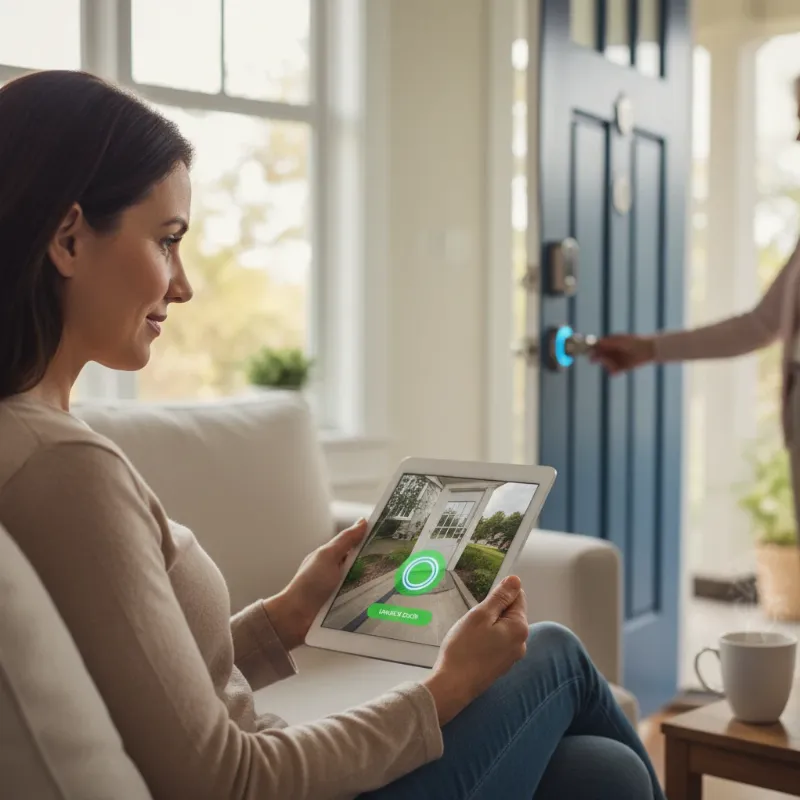 Caregiver remotely unlocking a smart lock for a senior, showcasing remote access and monitoring capabilities
Guide to Selecting the Right Smart Lock for Seniors
Selecting the perfect smart lock for an elderly loved one involves careful consideration of their specific lifestyle, needs, and the practicalities of the home environment.
First, determine specific needs and priorities. Consider the senior’s mobility, memory capabilities, and tech-savviness. Do they struggle with fine motor skills, making fingerprint or facial recognition more suitable? Is remote access for family essential for monitoring and assistance? What is the existing door type, and what level of security is truly necessary? Establish a budget, as smart lock prices vary widely based on features and brand.
Next, research reputable brands known for reliability and user-friendliness. Leading manufacturers in the smart lock space include Philips, Yale, Samsung, Xiaomi, Lockly, Schlage, August, and eufy. Look for brands with a strong track record in smart home technology and positive reviews from users, especially those focusing on accessibility for seniors.
Compare features and technical specifications. Prioritize easy-to-use access methods such as large-button keypads, quick fingerprint scanners, or voice control integration with smart home assistants (Alexa, Google Assistant). Check for robust security features like auto-locking, tamper alarms, and activity logs. Consider connectivity options – Wi-Fi for remote control or Bluetooth for simpler, local use. Battery life is crucial; look for locks with long-lasting batteries and low-battery alerts, possibly with backup power options like a physical key or a USB-C emergency port.
Reading user reviews and expert opinions can provide valuable insights into real-world performance, ease of installation, and daily usability. Pay attention to feedback specifically from caregivers or families who have installed these locks for older adults. Finally, verify warranty policies and technical support options. Reliable customer service and a comprehensive warranty are vital for troubleshooting and long-term peace of mind.
Tips for Using and Maintaining Smart Locks Properly
To ensure your smart lock operates smoothly and securely for years, especially for seniors, proper usage and maintenance are key.
- Regularly replace batteries or ensure rechargeable ones are topped up. Most smart locks will provide low-battery warnings, but it’s wise to establish a routine check, perhaps every 6-12 months, depending on usage and manufacturer recommendations. This prevents unexpected lockouts due to power failure.
- Keep the lock clean to prevent dust and grime from interfering with sensors (like fingerprint readers) or keypad functionality. Use a soft, dry cloth; avoid harsh chemicals that could damage electronic components or finishes.
- Update software and firmware regularly. Manufacturers frequently release updates to improve security, add features, and fix bugs. Ensure the associated app is updated on smartphones and that the lock’s firmware is current to benefit from the latest protections.
- Practice strong password hygiene. For keypad locks, use complex, non-obvious passcodes and change them periodically. Never share passcodes or biometric data with unauthorized individuals. Educate seniors on best practices for digital security.
- Contact customer support immediately if any issues arise. Do not attempt complex repairs yourself, as this could void the warranty or damage the lock further. Most reputable brands offer dedicated support for their products.
Common Smart Lock Issues and Troubleshooting for Seniors
Even with advanced technology, smart locks can encounter occasional glitches. Knowing how to address common problems can quickly restore security and convenience.
- Fingerprint not recognized: This often occurs due to dirty or wet fingers, or a dirty sensor. Advise seniors to clean their finger and the sensor. If the issue persists, try re-registering the fingerprint in the app.
- Lock is unresponsive (appears dead): The most frequent cause is drained batteries. Check the battery level via the app or try replacing them. Many locks have a backup physical key or an emergency power port (e.g., USB-C) that can be used to temporarily power the lock and gain entry.
- Lock is stuck or jammed: This could be a mechanical issue. First, check for any physical obstructions in the door frame or bolt. Ensure the door is properly aligned. If the problem persists, avoid forcing it and contact customer support or a locksmith.
- Security breach/hacking concerns: While rare, if a senior suspects unauthorized access or a security vulnerability, they should immediately change all passcodes, revoke temporary access, and update the lock’s firmware. If connected to Wi-Fi, ensure the home network is secure with a strong password. Enable two-factor authentication if available. Regular monitoring of activity logs can help detect unusual patterns.
Future Trends in Smart Lock Technology
The evolution of smart locks continues to bring exciting innovations that promise even greater safety and autonomy for seniors.
One significant trend is the deep integration of Artificial Intelligence (AI). AI can analyze usage patterns to detect anomalies, such as an elderly person not leaving their home for an unusually long period, and then trigger alerts to caregivers. AI could also optimize battery life and learn individual user preferences for more personalized access.
We are also seeing increased connectivity with other smart home devices. Future smart locks will seamlessly communicate with smart lighting, thermostats, and even medical alert systems. For instance, unlocking the door could automatically turn on lights, adjust the room temperature, and disable security cameras, creating a fluid and comforting experience.
Blockchain technology is being explored to enhance security by creating immutable, decentralized records of access, further safeguarding against hacking and data manipulation. This could provide an unprecedented level of trust and transparency in access management.
Beyond current methods, emerging features may include advanced voice recognition that can distinguish between family members, or gesture control for unlocking without physical contact. These innovations are geared towards making smart locks even more intuitive, reliable, and invisible in their operation, empowering seniors with an ever-greater sense of independence and security.
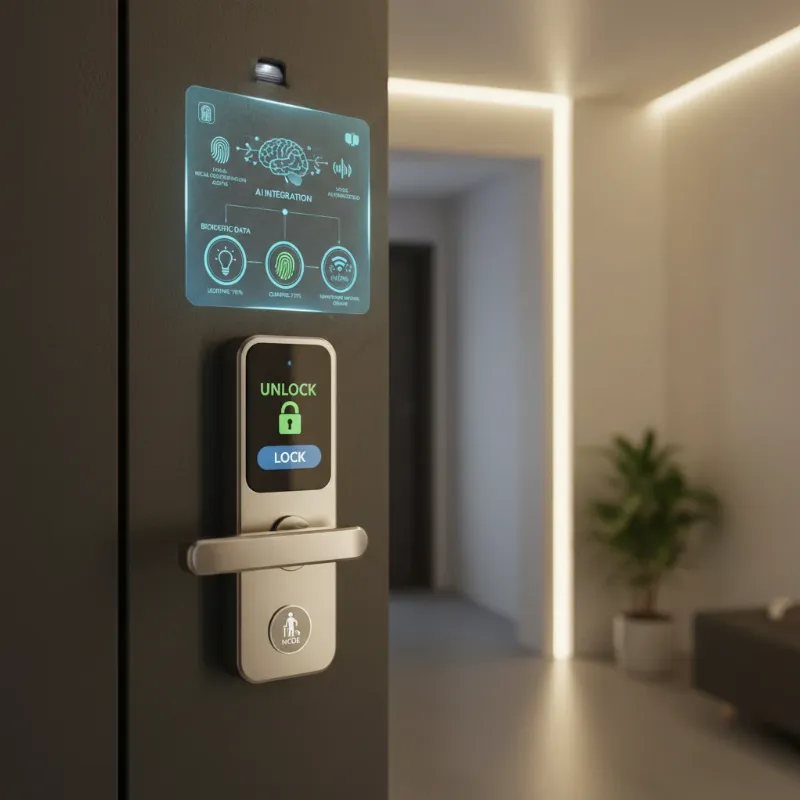 Futuristic smart lock concept with AI integration and seamless smart home connectivity for seniors
Conclusion
Smart locks are more than just a convenience; they are an essential component in empowering seniors to age in place safely and confidently. From simplifying daily routines with keyless entry to providing advanced security monitoring and remote access for caregivers, these devices offer a robust solution for independent living. The ability to manage access, receive real-time alerts, and integrate with broader smart home systems transforms a house into a truly intelligent and supportive environment.
By embracing smart lock technology, we are not just investing in security; we are investing in peace of mind, dignity, and independence for our aging loved ones. As technology continues to advance, smart locks will only become more intuitive and integrated, further enhancing the quality of life for seniors choosing to remain in the comfort of their own homes. Are you ready to explore how smart locks can redefine safety and convenience for your family?
Frequently Asked Questions
Are smart locks safer than traditional locks for seniors?
|
Our Picks for the Best smart locks in 2026
As an Amazon Associate I earn from qualifying purchases.
|
||
| Num | Product | Action |
|---|---|---|
| 1 | ULTRALOQ U-Bolt Pro WiFi Smart Lock with Door Sensor, 8-in-1 Keyless Entry Door Lock with Fingerprint ID, App Remote Control, Built-in WiFi Keypad Deadbolt, Auto Unlock, IP65 Waterproof, Easy Install |

|
| 2 | Schlage Encode Smart WiFi Deadbolt Lock for Front Door - Keyless Entry with App or Touchscreen - Works with Alexa, Hey Google, & Airbnb - Create Codes for Guests - Matte Black |
|
| 3 | Wyze Auto-Lock Bolt v2, Fingerprint Keyless Entry Smart Lock, AI Learning Scanner with Wi-Fi Front Door Lock Deadbolt, Auto-Lock, 8 Months Battery, BHMA2, IP53, Anti-Peep Keypad, Backup Keys |
|
| 4 | Yale Security Assure Lock 2 Deadbolt, Black Suede Keyed Smart Entry Door Lock with Wi-Fi Connected Keypad for Code Entry and Remote Access, YRD410-WF1-BSP |
|
| 5 | Smart Door Lock with Camera Fingerprint Keyless Entry Door Lock Electronic Deadbolt with Keypad Code, App Remote Control, Auto Unlock for Front Door |
|
| 6 | Wyze Palm Lock, Smart Door Lock with Palm Vein Recognition, Keyless Entry Smart Locks for Front Door, Keypad, Auto Lock, Dual Battery, Wi-Fi, Works with Alexa & Google, BHMA, IP53, Mechanical Key |
|
| 7 | Tapo Smart Wi-Fi Deadbolt Door Lock – Keyless Tactile Buttons, Customized Access with in-App Monitoring, Auto-Lock, IP54 Weatherproof, BHMA Grade 3, Compatible with Standard Door Sizes, Tapo DL100 |
|
| 8 | TEEHO TE001 Keyless Entry Door Lock with Keypad - Smart Deadbolt Lock for Front Door with 2 Keys - Auto Lock - Easy Installation - Matte Black |
|
| 9 | Smart Door Handle Lock with Keypad: Yamiry Fingerprint Smart Knob - Keyless Entry Digital Lock for Front Door - Deadbolt with APP - Generate Passcode Remotely - DIY Installation |
|
| 10 | Schlage Encode Smart WiFi Deadbolt Lock for Front Door - Keyless Entry with App or Touchscreen - Works with Alexa, Hey Google, & Airbnb - Create Codes for Guests - Satin Nickel Silver |
|
Yes, smart locks generally offer a higher level of security than traditional locks. They provide features like real-time monitoring, activity logs, remote locking, and temporary access codes, which are not available with mechanical keys. This allows for greater oversight and control, helping to prevent unauthorized entry and quickly identify any unusual activity. Advanced encryption and multi-factor authentication further bolster their security against modern threats.