Best Budget Smart Locks (2026)
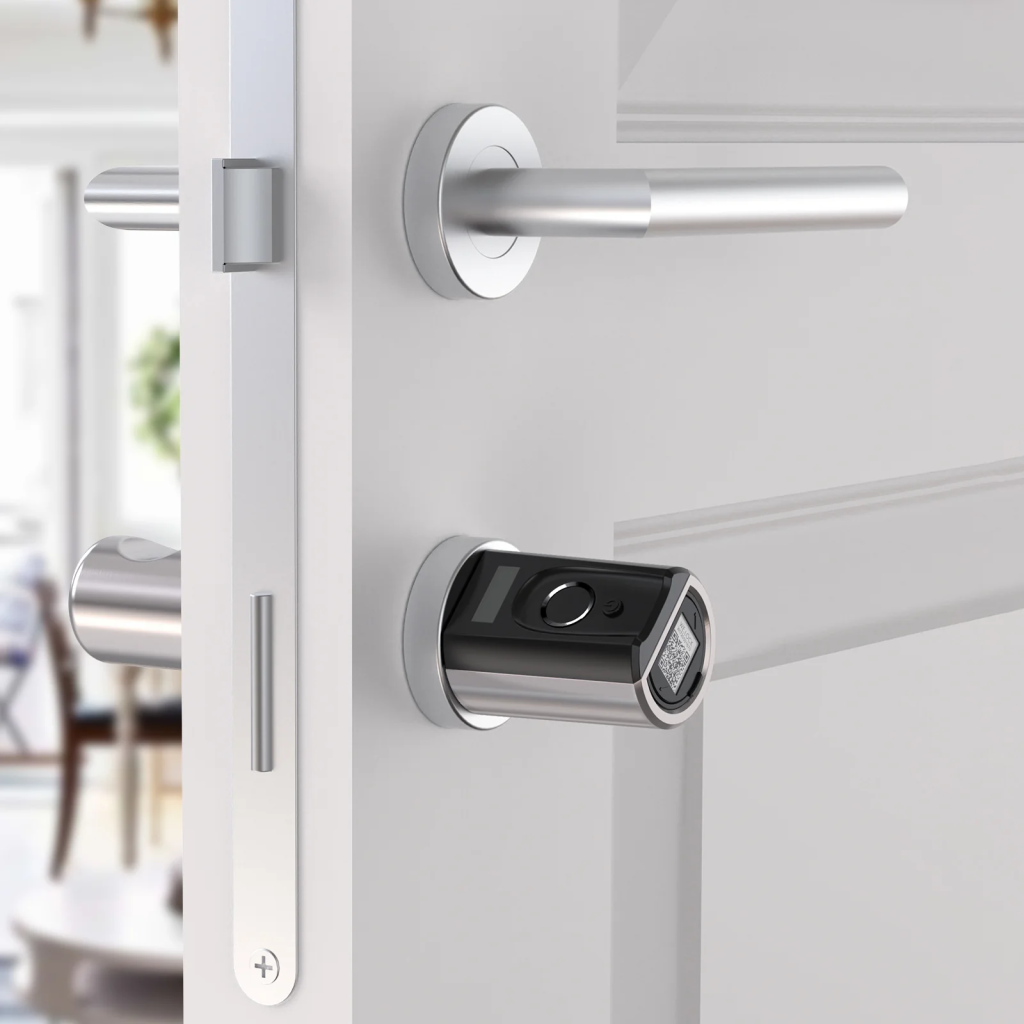
Quick Verdict: You don’t have to spend a fortune for keyless convenience. The Wyze Lock Bolt is the best budget pick — fingerprint entry for around $70–$89 with no subscription. The Yale Approach is a full-featured retrofit you can find under $100, the Wyze Lock retrofits an existing deadbolt cheaply, and the Ultraloq U-Bolt Pro is the best value if you can stretch a little for Grade 1 security and more features.
| Award | Lock | Best For | Key Features | Price Tier |
|---|---|---|---|---|
| Best Overall Budget | Wyze Lock Bolt | Fingerprint entry under $90 | Fingerprint + code, 50 prints | Budget (around $70–$89) |
| Best Under $100 Retrofit | Yale Approach | Renters wanting full features cheap | Retrofit, app + remote | Budget (under $100) |
| Cheapest Retrofit | Wyze Lock | Reusing an existing deadbolt | Retrofit, app + key, voice | Budget (around $60–$70) |
| Best Value Step-Up | Ultraloq U-Bolt Pro | More features + Grade 1 | Fingerprint, code, key, IP65 | Mid (around $140) |
| Best Budget Keypad | Kwikset SmartCode | Codes without connectivity hassle | Keypad codes, anti-peek screen | Budget (around $90–$120) |
How We Picked Best Budget Smart Locks
Budget smart locks make trade-offs — usually Bluetooth instead of Wi-Fi, fewer integrations, or no published security grade. We picked locks that keep the trade-offs sensible and still deliver real keyless convenience. All specs below come from manufacturer and retailer listings.
Our selection criteria:
- Verified specifications — Every spec below is drawn from manufacturer listings and published expert reviews. We have not bench-tested these locks ourselves; we report documented figures and general reception honestly.
- Security grade — We note ANSI/BHMA Grade 1 or Grade 2 certification where the manufacturer publishes it, and flag locks that carry no published grade.
- Connectivity and ecosystem — Wi-Fi, Bluetooth, Z-Wave, Thread/Matter, and which voice and smart-home platforms each lock supports.
- Real trade-offs — No lock is perfect. We list documented weaknesses — battery drain, hub requirements, finish limits — so you can judge fit.
- Price transparency — We use “around” pricing from retailer listings. Smart-lock prices fluctuate; always confirm the live price at checkout.
Best Overall Budget — Wyze Lock Bolt
Best for: Buyers who want fingerprint entry for the lowest price with no ongoing fees.
The Wyze Lock Bolt is a fingerprint deadbolt that typically sells for around $70–$89. It stores up to 50 fingerprints, unlocks in a fraction of a second, and includes keypad entry — all with no subscription. Battery life runs to several months. It is Bluetooth-only, so there is no remote unlocking, but for keyless convenience at the door it is the standout value pick.
The Wyze Lock Bolt earns the budget crown by spending its money where it counts — a fast, reliable fingerprint reader and a usable keypad — rather than on radios most budget buyers will not miss. There is no monthly fee, no hub to buy, and no app subscription gating basic use. The honest trade-off is that it is Bluetooth-only: you unlock at the door, not from across town, and you will not get an alert at work if you forgot to lock up. For a primary keyless lock on a tight budget, that is a trade most people happily accept.
- Fingerprint and keypad entry for around $70–$89
- Stores up to 50 fingerprints; no subscription
- Several months of battery life
- Simple, reliable deadbolt mechanism
- Bluetooth-only — no remote unlock or away alerts
- No published ANSI/BHMA grade
- Limited smart-home integration
Best Under $100 Retrofit — Yale Approach
Best for: Renters who want a full-featured connected lock they can find for less than $100.
The Yale Approach is a retrofit lock that brings Yale’s app, remote control, and code sharing to an existing deadbolt, and it is regularly available for under $100. It keeps the exterior — and the landlord’s key — unchanged, installs from the inside, and adds an optional keypad. It is a strong way to get most of the smart-lock experience without paying premium prices.
- Full-featured Yale app and remote control under $100
- Retrofits over an existing deadbolt; key still works
- Optional keypad for code entry
- Clean install with no exterior changes
- Some features rely on the Yale ecosystem and accessories
- Inherits the security grade of your existing deadbolt
- Keypad sold separately on the base configuration
Cheapest Retrofit — Wyze Lock
Best for: Buyers who want to add app and remote control to a deadbolt for as little as possible.
The original Wyze Lock retrofits over an existing deadbolt for around $60–$70, adding app control, auto-lock, and a door-open sensor. It works with Alexa, Google, and IFTTT, and an optional keypad adds code entry. It is one of the cheapest ways to make a normal deadbolt smart while keeping the existing key.
- Retrofit app control and auto-lock for around $60–$70
- Works with Alexa, Google, and IFTTT
- Existing key keeps working; door-open sensor included
- Optional keypad for code entry
- Requires the Wyze bridge for Wi-Fi/remote features
- No published ANSI/BHMA grade
- Bulkier interior body for the price tier
Best Value Step-Up — Ultraloq U-Bolt Pro
Best for: Buyers who can stretch past entry-level for Grade 1 security and more features.
If your budget reaches around $140, the Ultraloq U-Bolt Pro is a major step up: ANSI Grade 1 security, IP65 weatherproofing, a fingerprint reader, 50 codes, 100 fingerprints, and a key backup. It is far more capable than sub-$100 locks and remains excellent value, with the Wi-Fi bridge optional for remote control.
- Grade 1 security and IP65 weatherproofing for around $140
- Fingerprint, code, app, and key entry
- Stores 100 fingerprints and 50 codes
- Long battery life on the standard model
- Costs roughly double the cheapest picks
- Remote control needs the optional Wi-Fi bridge
- Bulky 8-AA interior body
Best Budget Keypad — Kwikset SmartCode
Best for: Buyers who want code entry without dealing with apps, Wi-Fi, or batteries draining fast.
The Kwikset SmartCode electronic deadbolt is a keypad lock rather than a connected smart lock — it has no Wi-Fi or Bluetooth. That is the point: you get code-based keyless entry that is simple and dependable, with long battery life because there is no radio. Kwikset’s SecureScreen anti-peek technology asks for random digits before your code. It is a smart choice for buyers who want codes without connectivity headaches.
- Simple, reliable keypad code entry with no app required
- Long battery life — no power-hungry radio
- SecureScreen anti-peek keypad technology
- Affordable and widely available
- No Wi-Fi or Bluetooth — no remote control or alerts
- Not a connected smart lock in the full sense
- No app-based logging or code scheduling
Budget Smart Lock Buying Guide
What you give up at a budget price
Cheaper locks usually drop built-in Wi-Fi (relying on Bluetooth or an extra bridge), offer fewer smart-home integrations, and may not publish an ANSI/BHMA grade. Decide which of these you can live without.
Retrofit vs. full lock
Retrofit locks (Wyze Lock, Yale Approach) reuse your existing deadbolt, which saves money and suits renters. Full deadbolt locks cost more but can upgrade the bolt’s mechanical security.
Bluetooth vs. Wi-Fi
Bluetooth-only budget locks work in range and last longer on batteries; you give up remote unlock and away-from-home alerts. If remote control matters, budget for a model with built-in Wi-Fi or the required bridge.
Watch for subscriptions
A truly budget lock should have no mandatory monthly fee for core features. The Wyze Lock Bolt and Kwikset SmartCode have none; always confirm before buying that the features you want aren’t behind a subscription.
Battery type
Replaceable AA locks are cheap to maintain; check expected battery life. Locks without a radio (Kwikset SmartCode) last longest because they aren’t constantly listening for a signal.
Smart Lock Features That Matter (Whatever You Buy)
Connectivity: Wi-Fi, Bluetooth, Z-Wave, Thread and Matter
Every smart lock has to talk to your phone and, often, the wider internet. Bluetooth works only within about 30 feet, so a Bluetooth-only lock lets you skip a key at the door but cannot be controlled while you are away unless it is paired with a bridge. Built-in Wi-Fi (as on the Schlage Encode and Kwikset Halo) connects straight to your router for true remote control and alerts, at the cost of faster battery drain. Z-Wave joins a low-power mesh through a hub, trading the extra hub purchase for much longer battery life and deeper automation. Thread and Matter are the newer standards — locks like the Aqara U200 and Level Lock+ use them for fast, reliable local control that works across Apple, Google, Amazon, and SmartThings. Decide whether you truly need away-from-home control before paying the battery and complexity premium that Wi-Fi and Matter setups add.
Battery life and what drains it
Smart locks run on AA batteries, CR-cell coin batteries, or rechargeable packs. The radio is the biggest power draw: Wi-Fi locks may need fresh batteries every few to six months under regular use, while Bluetooth and Z-Wave locks commonly approach a year. Fingerprint readers, backlit touchscreens, and frequent auto-locking all shorten life. The practical lessons are to buy a lock with clear low-battery alerts, keep spares on hand, and — if a door sees heavy daily traffic or sits in a rental you visit rarely — favor a longer-lasting radio like Z-Wave or a Bluetooth lock with a bridge over a power-hungry standalone Wi-Fi model.
ANSI/BHMA security grades explained
Residential locks are graded by ANSI/BHMA from Grade 3 (basic) up to Grade 1 (highest). The grade reflects how much force and how many operating cycles a lock survives in standardized testing — a Grade 1 deadbolt like the Schlage Encode Plus is rated to withstand more forced-entry force and up to 250,000 cycles. For an exterior door, aim for Grade 1 or Grade 2. Remember that a retrofit lock inherits the mechanical strength of the deadbolt it sits on, so the quality of the underlying bolt matters as much as the smart electronics. A published grade is also a useful honesty signal: budget locks that omit any ANSI/BHMA rating may still be fine for a low-risk interior or secondary door, but they should not be your only defense on a main entrance.
How smart locks really fail — and how to avoid it
The headline fear with smart locks is remote hacking, but in practice that is rare against reputable brands that encrypt their wireless links with AES-128. The far more common problems are mundane: a weak or shared passcode, auto-lock left switched off so the door simply stays unlocked, dead batteries with no spares on hand, or a retrofit lock fitted to a misaligned deadbolt that then jams. Avoid these by choosing a unique code (never your street number or birth year), enabling auto-lock, keeping the right batteries in a drawer, and making sure your deadbolt throws smoothly by hand before you motorize it. Treat the smart features as convenience layered on top of a sound mechanical lock, not a replacement for one.
Voice assistants and smart-home integration
If you already use Amazon Alexa, Google Home, Apple Home, or Samsung SmartThings, check that your lock supports the right platform before buying. Most of the picks here work with Alexa and Google for voice status checks and locking by command — for security reasons, voice unlocking usually requires a spoken PIN. Apple Home support, and especially Apple Home Key tap-to-unlock (on the Schlage Encode Plus, Level Lock+, and Aqara locks), is the standout for iPhone households. The newer Matter standard is making cross-platform support less of a guessing game, since a Matter lock is designed to work across all the major ecosystems at once. The practical advice: pick the lock that natively supports the assistant your home already runs on, rather than buying a lock and hoping a bridge or workaround fills the gap later.
Installation and what to check on your door
Most smart locks install with a screwdriver in 20–30 minutes for a full deadbolt replacement, or about ten minutes for a retrofit that reuses your existing bolt. Before buying, confirm three things on your door: the backset (the distance from the door edge to the center of the bolt hole, usually 2-3/8″ or 2-3/4″), the door thickness, and whether the existing bore hole is the standard 2-1/8″. Retrofit locks such as the August Wi-Fi and Level Lock+ are the safest choice for renters because they leave the exterior and the original key untouched and come off cleanly at move-out. If you are unsure your door meets the lock’s requirements, check the manufacturer’s compatibility guide before ordering.
Frequently Asked Questions
What is the best budget smart lock in 2026?
The Wyze Lock Bolt is the best budget pick — fingerprint and keypad entry for around $70–$89 with no subscription. If you want a full-featured connected retrofit under $100, the Yale Approach is the strongest value; and for code entry without any connectivity, the Kwikset SmartCode is dependable.
Are cheap smart locks safe?
A budget lock can be safe if you use it well, but most do not publish an ANSI/BHMA security grade and many are Bluetooth-only. Use a strong code, enable auto-lock, and if physical security is a top concern, spend a little more on a Grade 1 lock like the Ultraloq U-Bolt Pro.
Do budget smart locks have monthly fees?
The best budget locks do not. The Wyze Lock Bolt and Kwikset SmartCode have no required subscription for core features. Always confirm before purchase, because some camera-equipped or cloud-dependent locks do charge for full functionality.
Can I get a smart lock for under $100?
Yes. The Wyze Lock Bolt (around $70–$89), the Wyze Lock retrofit (around $60–$70), and the Yale Approach (often under $100) all fit a sub-$100 budget. You typically trade away built-in Wi-Fi or a published security grade at this price.
Is a retrofit lock a good budget choice?
Yes, especially for renters. Retrofit locks like the Wyze Lock and Yale Approach reuse your existing deadbolt, cost less than full replacements, keep your key working, and remove cleanly when you move — all reasons they are popular budget picks.
Final Verdict
The Wyze Lock Bolt is the best budget smart lock of 2026: fingerprint and keypad entry for under $90 with no subscription. For a connected retrofit under $100, the Yale Approach is the standout, and the Wyze Lock is the cheapest way to make an existing deadbolt smart.
If you can stretch to around $140, the Ultraloq U-Bolt Pro buys you Grade 1 security and far more features, while the Kwikset SmartCode is the pick for simple, reliable code entry without connectivity. Confirm live pricing before buying.
Last updated: June 2026
See our main guide: Best Smart Locks (2026). Related: Best Keyless Door Locks. Related: Best Fingerprint Door Locks. Related: Best Smart Locks for Apartments.