The modern home is a bustling hub, especially for families. Juggling school runs, after-school activities, work schedules, and everything in between can be overwhelming. In this dynamic environment, the security and convenience of your home access are no longer luxuries but necessities. This is where smart locks become indispensable tools for every parent, transforming your front door into a smart, secure, and stress-free entry point. They offer a sophisticated blend of technology and practicality, designed to simplify daily life while providing unparalleled peace of mind.
What is a Smart Lock?
At its core, a smart lock is an electromechanical lock designed to perform locking and unlocking operations on a door when it receives instructions from an authorized device using a wireless protocol and a cryptographic key. Unlike traditional mechanical locks that rely on physical keys, smart locks introduce a new level of control and flexibility.
The evolution of smart locks has brought about various types, each leveraging different technologies to offer enhanced security and convenience. Common types include those that use:
- Bluetooth: Connects directly to a smartphone within a limited range.
- Wi-Fi: Allows for remote access and control from anywhere with an internet connection.
- Fingerprint Recognition: Biometric access, offering quick and secure entry.
- Keypads (PIN codes): Provides keyless entry using a memorable code.
- RFID/NFC Tags: Proximity-based entry using cards or fobs.
- Facial Recognition: Advanced biometric systems offering hands-free access.
From simple electronic keypads to sophisticated systems integrated with home automation, smart locks have rapidly evolved from basic security devices to integral components of a connected home.
Superior Advantages of Smart Locks
Smart locks are not just a technological upgrade; they represent a fundamental shift in how we manage home security and access. For parents, their benefits extend far beyond simply locking a door, addressing common family challenges with innovative solutions. These devices offer a blend of convenience, control, and heightened security that traditional locks simply cannot match. By embracing smart lock technology, families can enjoy a more streamlined and protected living environment, making daily routines smoother and worries fewer.
Five Essential Reasons Every Parent Needs a Smart Lock
For parents, time is a precious commodity, and peace of mind is invaluable. Smart locks deliver on both fronts, offering five compelling reasons why they are an indispensable addition to any family home.
1. Unparalleled Convenience and Keyless Freedom
|
Our Picks for the Best smart locks in 2026
As an Amazon Associate I earn from qualifying purchases.
|
||
| Num | Product | Action |
|---|---|---|
| 1 | Smart Door Handle Lock with Keypad: Yamiry Fingerprint Smart Knob - Keyless Entry Digital Lock for Front Door - Deadbolt with APP - Generate Passcode Remotely - DIY Installation |

|
| 2 | Wyze Auto-Lock Bolt v2, Fingerprint Keyless Entry Smart Lock, AI Learning Scanner with Wi-Fi Front Door Lock Deadbolt, Auto-Lock, 8 Months Battery, BHMA2, IP53, Anti-Peep Keypad, Backup Keys |
|
| 3 | Schlage Encode Smart WiFi Deadbolt Lock for Front Door - Keyless Entry with App or Touchscreen - Works with Alexa, Hey Google, & Airbnb - Create Codes for Guests - Matte Black |
|
| 4 | Yale Security Assure Lock 2 Deadbolt, Black Suede Keyed Smart Entry Door Lock with Wi-Fi Connected Keypad for Code Entry and Remote Access, YRD410-WF1-BSP |
|
| 5 | TEEHO TE001 Keyless Entry Door Lock with Keypad - Smart Deadbolt Lock for Front Door with 2 Keys - Auto Lock - Easy Installation - Matte Black |
|
| 6 | ULTRALOQ U-Bolt Pro WiFi Smart Lock with Door Sensor, 8-in-1 Keyless Entry Door Lock with Fingerprint ID, App Remote Control, Built-in WiFi Keypad Deadbolt, Auto Unlock, IP65 Waterproof, Easy Install |
|
| 7 | Smart Door Lock with Camera Fingerprint Keyless Entry Door Lock Electronic Deadbolt with Keypad Code, App Remote Control, Auto Unlock for Front Door |
|
| 8 | Schlage Encode Smart WiFi Deadbolt Lock for Front Door - Keyless Entry with App or Touchscreen - Works with Alexa, Hey Google, & Airbnb - Create Codes for Guests - Satin Nickel Silver |
|
| 9 | Tapo Smart Wi-Fi Deadbolt Door Lock – Keyless Tactile Buttons, Customized Access with in-App Monitoring, Auto-Lock, IP54 Weatherproof, BHMA Grade 3, Compatible with Standard Door Sizes, Tapo DL100 |
|
| 10 | Wyze Palm Lock, Smart Door Lock with Palm Vein Recognition, Keyless Entry Smart Locks for Front Door, Keypad, Auto Lock, Dual Battery, Wi-Fi, Works with Alexa & Google, BHMA, IP53, Mechanical Key |
|
Imagine a life free from the jingle of keys, the frantic search for a misplaced spare, or the dreaded lockout. Smart locks make this a reality, offering diverse keyless entry options that are a game-changer for busy parents and children alike. Kids can enter using a simple, personalized PIN code, a fingerprint, or even their smartphone, eliminating the risk of lost physical keys. This means no more worries about them getting locked out after school or keys falling into the wrong hands. For parents, auto-lock features ensure the door is secured every time it closes, removing the nagging doubt of whether you remembered to lock up when rushing out the door. The ability to unlock the door with a tap on your phone, even with arms full of groceries or a sleeping child, transforms daily entry into a seamless experience.
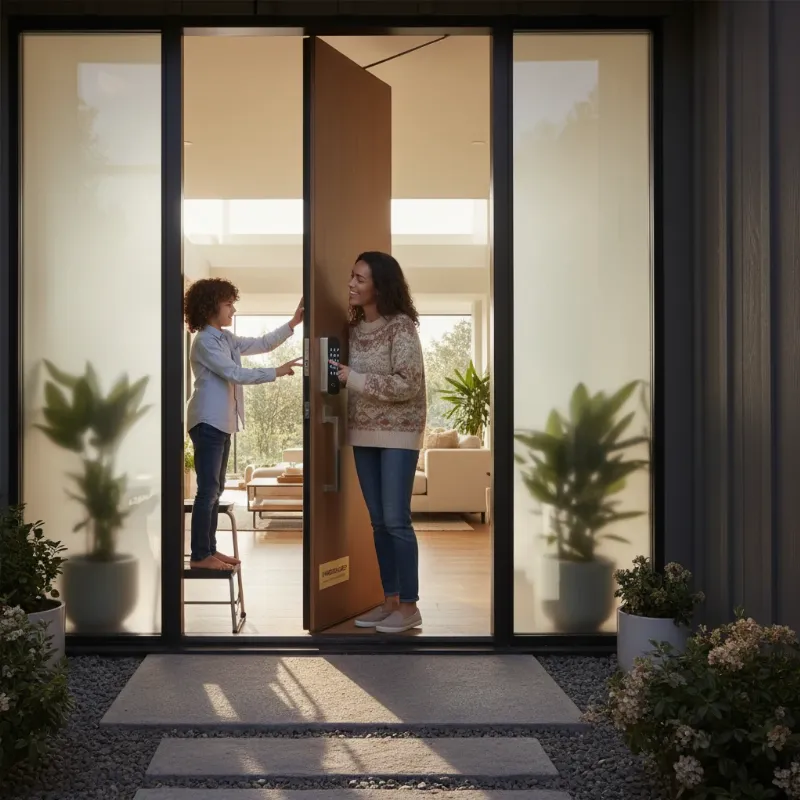 A parent and child easily entering their home using a smart lock's keypad, no physical keys needed, symbolizing convenience.
2. Enhanced Security and Real-Time Monitoring
Home security is paramount for parents, and smart locks offer a significant upgrade over traditional deadbolts. Beyond the physical robustness, these devices provide advanced security features designed to protect your family and belongings. Many smart locks utilize robust encryption protocols, making them far more difficult to tamper with than conventional locks. Crucially, they eliminate the need for hidden spare keys under the doormat or a fake rock – common weak points that burglars often exploit.
A key advantage for parents is the ability to receive real-time alerts. You get instant notifications on your smartphone whenever the door is locked, unlocked, or if there’s any unusual activity, like an attempted forced entry. Comprehensive activity logs track who enters and exits and when, allowing you to monitor your home’s access history at any time. This digital footprint offers invaluable transparency and a heightened sense of security, ensuring you are always informed about your home’s access status, even when you are away.
3. Customizable Access Control for Every Family Member
One of the most powerful features of smart locks for families is their granular access control. You can assign unique PIN codes, fingerprints, or virtual keys to each family member, house sitter, cleaner, or guest. This personalization allows you to manage who can enter your home and when. For instance, you can create temporary access codes for a dog walker or a repair technician that are only valid during specific hours or for a limited duration. If a service provider no longer needs access, their code can be instantly revoked, eliminating the hassle and cost of re-keying locks. For older children, assigning individual codes not only gives them a sense of responsibility but also allows parents to track their arrival home safely after school, providing peace of mind without constant check-in calls. This level of control ensures that only authorized individuals can access your home, precisely when they need to.
4. Peace of Mind, Anytime, Anywhere
For parents, peace of mind often feels like a rare commodity. Smart locks significantly contribute to this by offering remote control and monitoring capabilities that connect you to your home, no matter where you are. Whether you’re at work, running errands, or enjoying a much-needed vacation, you can remotely lock or unlock your door with a tap on your smartphone. This is incredibly useful if a child forgets their code, a neighbor needs to check on something, or you simply can’t remember if you locked the door.
Beyond mere control, smart locks provide tangible reassurance. Receiving a notification that your children have arrived home safely after school, seeing a delivery person access your porch through a temporary code, or remotely locking the door you accidentally left open—these features alleviate daily anxieties. The ability to maintain a secure home environment and know its status from anywhere allows parents to focus on other important matters, confident that their home and family are protected.
5. Seamless Smart Home Integration for a Smarter Family Life
Smart locks truly shine when integrated into a broader smart home ecosystem, creating an automated and intelligent living space that benefits the entire family. Connecting your smart lock with other smart devices unlocks a world of convenience and enhanced security. For example, you can set up routines where unlocking the front door automatically turns on the lights, adjusts the thermostat to a comfortable temperature, or disarms the security system.
Integrating with a video doorbell allows you to see and speak to visitors, verify their identity, and then unlock the door remotely, all from one app. Voice assistant compatibility means you can lock the doors with a simple command like “Hey Google, lock the front door” when your hands are full. This interconnectedness streamlines daily tasks, enhances energy efficiency, and creates a harmonious home environment where devices work together seamlessly to support your family’s lifestyle.
Smart Locks: A Comparison for Family Needs
Choosing the right smart lock involves weighing various features against your family’s specific needs. Below is a comparison of common smart lock types from a parental perspective:
| Feature | Fingerprint Lock | Keypad (PIN Code) Lock | Card/Fob Lock | Facial Recognition Lock | App/Bluetooth/Wi-Fi Lock |
|---|---|---|---|---|---|
| Security Level | Very High | High | Medium | Extremely High | High |
| Convenience | Excellent (no keys) | Very Good (no keys) | Good (can lose cards) | Excellent (hands-free) | Excellent (remote access) |
| Child-Friendliness | High (easy for kids) | High (easy to remember) | Medium (easy to lose cards) | High (no input needed) | High (phone control) |
| Cost | Medium to High | Low to Medium | Low to Medium | Very High | Medium |
| Best For | Active families, secure entry | General family use, guest access | Office, occasional guests | High-tech, advanced security | Remote control, smart home |
How to Choose the Right Smart Lock for Your Family
Selecting the perfect smart lock for your home requires careful consideration of several factors to ensure it meets your family’s unique needs for security, convenience, and functionality.
First, identify your core needs. What is your primary motivation? Is it eliminating lost keys for children, monitoring their arrival home, or managing access for a caregiver? Your specific requirements will guide your choices. Consider the type of door you have, as some locks are designed for standard deadbolts while others may accommodate different configurations.
Next, research reputable brands known for quality and reliability. Manufacturers like Philips, Yale, Samsung, Schlage, August, Xiaomi, and Kwikset offer a wide range of smart locks with varying features. Look into their product lines, focusing on models with strong security features such as robust encryption and tamper alerts.
Compare features and technical specifications. Do you prefer fingerprint access, a keypad, or smartphone control? What connectivity options are crucial (Wi-Fi, Bluetooth, Zigbee, Z-Wave)? Ensure the lock offers a comprehensive activity log and real-time notifications if these are important for monitoring. Also, check for battery life and backup power options, as a dead battery can be a significant inconvenience.
Read user reviews and expert opinions to gain insights into real-world performance and potential issues. Pay attention to feedback from other parents regarding ease of use for children and overall reliability.
Finally, verify warranty and technical support. A good warranty provides protection, and responsive customer service is crucial for troubleshooting any issues that may arise. Investing in a quality smart lock is an investment in your home’s security and your family’s peace of mind.
Tips for Using and Maintaining Smart Locks Correctly
To maximize the benefits and longevity of your smart lock, proper usage and diligent maintenance are essential. Following these tips will ensure your smart lock operates reliably and securely for years to come.
Firstly, replace batteries regularly. Smart locks rely on battery power, and neglecting this can lead to unexpected lockouts. Most smart locks provide low-battery warnings via their app, so heed these alerts promptly. It’s a good practice to set a reminder to check battery levels every few months, especially for frequently used doors.
Secondly, keep your lock clean. Dust, dirt, and moisture can interfere with keypads, fingerprint sensors, and internal mechanisms. Gently wipe down the exterior surfaces with a soft, dry cloth. Avoid harsh chemicals or abrasive cleaners that could damage the finish or electronic components.
Thirdly, update software and firmware regularly. Manufacturers frequently release updates to enhance security, fix bugs, and introduce new features. Ensure your lock’s app and firmware are always up-to-date to benefit from the latest protections and improvements. Enable automatic updates if available.
Furthermore, never share your master codes or virtual keys indiscriminately. Assign unique, strong PINs to each family member and use temporary codes for guests or service providers, revoking them once access is no longer needed. Educate children on the importance of keeping their codes private.
Lastly, contact the manufacturer or a certified technician if you encounter persistent issues or believe your lock is compromised. Do not attempt complex repairs yourself, as this could void the warranty or damage the device. Proactive maintenance and responsible use will ensure your smart lock remains a reliable guardian of your home.
Common Issues When Using Smart Locks and How to Fix Them
While smart locks offer remarkable convenience and security, users may occasionally encounter issues. Understanding these common problems and their solutions can help maintain smooth operation.
One frequent concern is battery drain. Smart locks, especially Wi-Fi models, consume power. If your lock’s battery dies, you could be locked out.
- Fix: Regularly monitor battery levels via the app and replace batteries promptly when low-battery alerts appear. Many locks also include a physical key override or emergency power jump-start options, so familiarize yourself with these backups.
Another common issue involves fingerprint recognition failure. This can be frustrating when quick access is needed.
- Fix: Ensure fingers are clean and dry when attempting to scan. Re-enroll fingerprints if recognition becomes consistently poor, and try different fingers. Most biometric locks also offer alternative entry methods like PIN codes or app control.
Connectivity problems can arise if your smart lock relies on Wi-Fi or Bluetooth. A lost internet connection or a weak signal can prevent remote access or delay notifications.
- Fix: Ensure your home Wi-Fi network is stable and the router is centrally located or use Wi-Fi extenders. For Bluetooth locks, ensure your smartphone is within range. Some smart locks have offline capabilities, allowing local entry even without an internet connection.
Finally, security concerns like hacking are often raised, although modern smart locks employ strong encryption.
- Fix: Always use strong, unique passwords for your smart lock app and home network. Enable two-factor authentication if available. Keep your lock’s firmware updated, as these updates often patch security vulnerabilities. Integrating your smart lock with a secure home network, perhaps even with a VPN on your router, adds an extra layer of digital protection.
By addressing these common issues proactively, parents can enjoy the full benefits of their smart locks with minimal disruption.
Future Trends in Smart Locks
The landscape of smart lock technology is constantly evolving, promising even more sophisticated and integrated solutions for the future. As innovation continues, we can anticipate several exciting trends that will further enhance home security and convenience for families.
One major trend is the deeper integration of Artificial Intelligence (AI). Future smart locks may incorporate AI algorithms for advanced anomaly detection, learning family routines to identify unusual access patterns or potential threats more accurately. Imagine a lock that can differentiate between a child returning home and an unknown visitor, adjusting its alert sensitivity accordingly.
Enhanced connectivity with broader smart home ecosystems will also become standard. Smart locks will seamlessly integrate with a wider array of smart devices, beyond just cameras and voice assistants. This could include proactive climate control adjustments based on family members’ proximity, automated lighting sequences for energy efficiency, or even direct communication with smart appliances upon entry. The goal is a truly unified and responsive smart home experience.
Moreover, advanced biometric technologies are on the horizon. While fingerprint and facial recognition are already in use, expect to see more robust 3D facial mapping, iris scanning, and potentially even gait recognition, offering higher levels of security and completely hands-free entry.
The role of blockchain technology in enhancing security is also being explored. By decentralizing and encrypting access logs, blockchain could offer an immutable and highly secure record of home entry and exit, further protecting against data breaches and unauthorized access. New features like voice and gesture control could become more prevalent, allowing users to unlock doors with specific phrases or hand movements, adding layers of convenience and personalization. These advancements aim to make smart locks not just security devices, but intelligent guardians that seamlessly adapt to and predict the needs of modern families.
Conclusion
For parents navigating the complexities of modern family life, smart locks are more than just a home upgrade; they are an essential tool for creating a safer, more convenient, and more connected living environment. From providing keyless freedom that eliminates the stress of lost keys to offering real-time monitoring and customizable access controls, these intelligent devices address critical parental concerns. They deliver unparalleled peace of mind, knowing your children are safe and your home is secure, all manageable from the palm of your hand. When integrated into your smart home, they streamline daily routines and enhance the overall efficiency of your household. Embracing smart lock technology is a proactive step toward simplifying your life and elevating your family’s security to a new level. Isn’t it time to unlock a smarter, safer future for your home?
Frequently Asked Questions
Are smart locks safer than traditional locks?
Generally, yes, smart locks offer enhanced security features that often surpass traditional locks. While traditional locks can be picked or forced, smart locks add layers of digital protection such as encryption, real-time activity logs, and tamper alerts. They also eliminate common vulnerabilities like hidden spare keys and the risk of physical keys being lost or stolen. However, it’s crucial to choose a reputable brand and maintain strong digital security practices.
What happens if the smart lock battery dies?
Most smart locks are designed with backup options to prevent lockouts due to a dead battery. Many models include a physical key override, allowing you to use a traditional key. Others feature an emergency power terminal where you can temporarily connect a 9V battery to jump-start the lock and gain entry. Smart locks typically provide low-battery warnings well in advance via their smartphone app to give you ample time to replace them.
Can smart locks be hacked?
While no technology is entirely immune to hacking, reputable smart locks are built with advanced encryption and security protocols to make them highly resistant to cyber threats. It’s similar to the security of your online banking. The biggest risks often come from weak passwords or outdated firmware. By using strong, unique passwords, enabling two-factor authentication, and keeping your lock’s software updated, you significantly mitigate the risk of unauthorized digital access.
How do smart locks help with child safety?
Smart locks enhance child safety in several ways. They eliminate the need for physical keys, reducing the chance of children getting locked out or keys falling into the wrong hands. Parents can assign unique PINs or fingerprints to children for easy entry and receive real-time notifications when they arrive home safely after school. Some locks even allow scheduling access times, preventing younger children from leaving the house unsupervised during certain hours.
Are smart locks compatible with all types of doors?
Most smart locks are designed to replace standard deadbolt locks and are compatible with a wide range of door types and thicknesses. However, compatibility can vary, especially for older doors, multi-point locking systems, or non-standard door configurations. It’s always recommended to check the product specifications and your door’s dimensions and existing hardware before purchasing to ensure a proper fit and easy installation.